A market report is only as useful as your ability to read it. Headlines love a single number — a median price, a days-on-market figure, a year-over-year percentage — but Miami's condo market is really a dozen different markets stacked on top of each other, each moving to its own rhythm. This guide is the evergreen companion to those headlines: what the numbers mean, why they move, and how to tell a real signal from noise. A Q2 2026 market comparison needs a dated transaction dataset with a stated geography and property type. We have not established that dataset for this report. Ask for the original published figures and distinguish asking prices, completed sales and inventory measures before applying a trend to a particular residence.
Read these four numbers together, never alone
Median price tells you where the middle of the closed-sale distribution sits, but it says nothing about the mix behind it. A quarter where a handful of trophy penthouses close can lift the median even if most buildings are flat. Price per square foot strips out unit size and is the better apples-to-apples gauge — yet it still varies wildly by view, floor and finish level inside the same tower. Inventory (how many units are listed) and absorption (how fast they sell) are the supply-and-demand pair that actually predicts where prices go next: rising inventory with slowing absorption is a softening market, even if last quarter's median looked strong. Days on market is the lagging confirmation. Watch all four as a system and the picture stabilizes.
Why Miami swings differently than the national market
National headlines are driven by 30-year mortgage rates because most of the country buys with financing. A large share of Miami's condo trades — especially in luxury and oceanfront product — close in cash or with foreign-national and crypto-collateralized financing, so they are far less rate-sensitive than the rest of the U.S. The demand base is also unusual: domestic relocation from high-tax states, a deep international buyer pool, and second-home buyers who treat a Miami residence as a lifestyle asset rather than a primary mortgage decision. That mix is why the city can hold firm, or even climb, in quarters when national sales volume is falling. It is a feature of the market, not a contradiction of it.
Preconstruction and resale are two different clocks
One of the most common reading errors is blending preconstruction and resale into a single trend line. They behave nothing alike. Preconstruction pricing is set by the developer, climbs through successive release tiers as a building sells out, and is paid in deposit installments over years — so a launch can post record per-square-foot numbers that reflect future delivery, not today's resale reality. Resale prices reflect what buyers will pay right now for an existing, deliverable unit with known HOA dues and reserves. When you see a neighborhood's average price jump, check whether a new tower's launch pricing is doing the lifting before you conclude the whole area re-rated.
The market is local down to the building
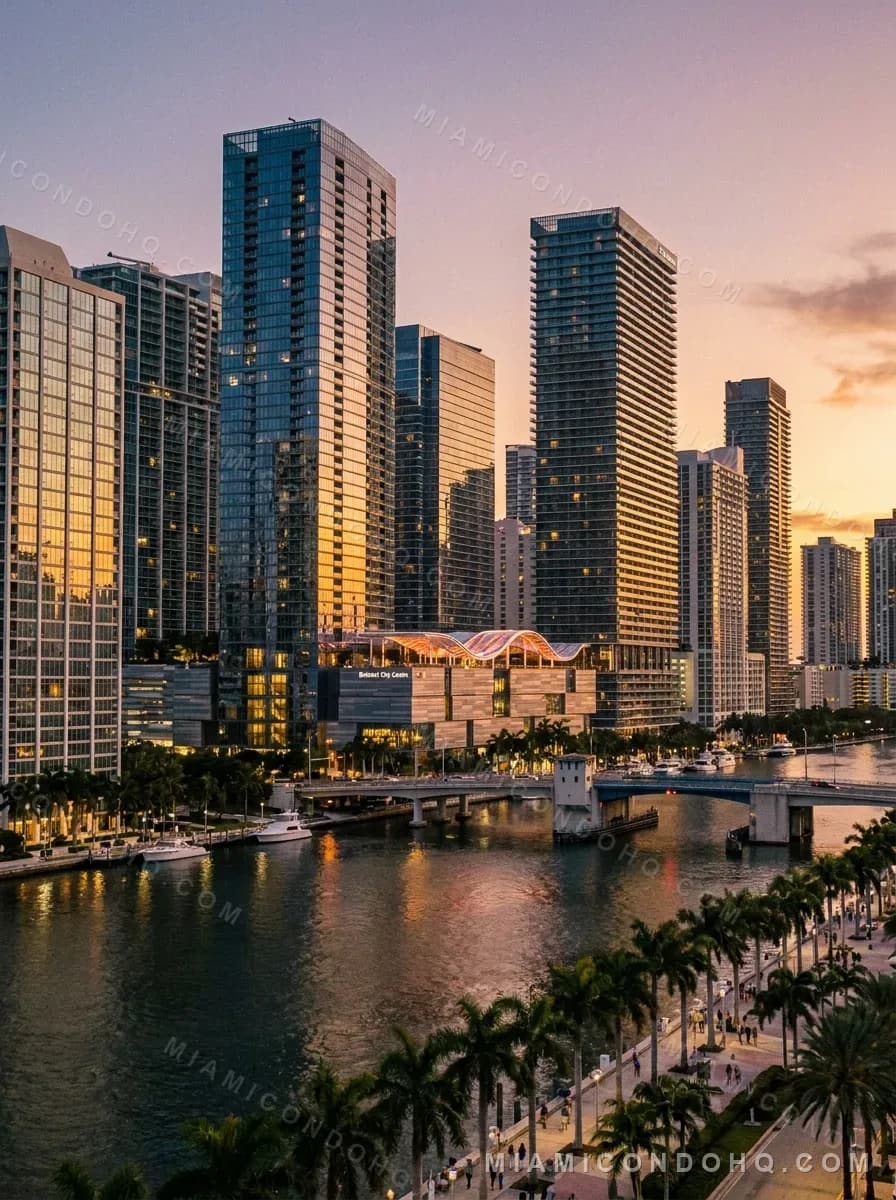
There is no single "Miami price." Brickell trades on walkability, rental demand and a dense urban-core lifestyle; Edgewater is the city's bayfront new-construction laboratory; Sunny Isles Beach is a wall of branded oceanfront supertalls bought largely by international families. Even within one neighborhood, two towers a block apart can diverge on price per square foot because of reserves, rental rules, insurance costs and amenity quality. Post-Surfside, a building's structural reserve health has become a genuine pricing input. This is why our neighborhood and building pages exist alongside the market report — the citywide average is a starting point, and the real answer lives at the building level.
Use the data, but verify the building
Treat any market report — ours included — as orientation, not a valuation. The honest way to use it is to read the citywide and neighborhood direction, then narrow to the specific buildings you are considering and pull their actual closed comps, HOA budgets and reserve studies. When you are ready to move from trend-reading to a building-specific analysis, that is the point to bring in a person who can pull the comps that a chart never shows. A Q2 2026 market comparison needs a dated transaction dataset with a stated geography and property type. We have not established that dataset for this report. Ask for the original published figures and distinguish asking prices, completed sales and inventory measures before applying a trend to a particular residence.
Questions readers ask about Miami condo market data
Which numbers actually matter in a condo market report?
Four, read together rather than alone. Median price tells you where the middle of the closed-sale distribution sits but says nothing about the mix behind it. Price per square foot strips out unit size and is the better apples-to-apples gauge. Inventory and absorption are the supply-and-demand pair that predicts where prices go next. Days on market is the lagging confirmation.
Why does Miami move differently from the national market?
Because a large share of its condo trades, especially in luxury and oceanfront product, close in cash or with foreign-national and crypto-collateralised financing, so they are far less rate-sensitive than the rest of the country. The demand base is also unusual: domestic relocation from high-tax states, a deep international buyer pool, and second-home buyers treating a Miami residence as a lifestyle asset rather than a primary mortgage decision.
Why shouldn't I blend preconstruction and resale prices?
Because they behave nothing alike. Preconstruction pricing is set by the developer, climbs through successive release tiers as a building sells out, and is paid in deposit instalments over years, so a launch can post record per-square-foot numbers reflecting future delivery rather than today's resale reality. When a neighborhood's average price jumps, check whether a new tower's launch pricing is doing the lifting.
Is there a single Miami condo price?
No. Brickell trades on walkability and rental demand, Edgewater is the bayfront new-construction laboratory, and Sunny Isles Beach is a wall of branded oceanfront supertalls bought largely by international families. Even within one neighborhood, two towers a block apart can diverge on price per square foot because of reserves, rental rules, insurance costs and amenity quality.
How should I use a market report?
A Q2 2026 market comparison needs a dated transaction dataset with a stated geography and property type. We have not established that dataset for this report. Ask for the original published figures and distinguish asking prices, completed sales and inventory measures before applying a trend to a particular residence.
Miami availability
Miami Condo HQ has no live Miami MLS feed. Sample listings do not establish availability or transaction prices. Use /contact to request an introduction to a licensed partner agent for the residence you are researching.

Written by
Miami Condo HQ
Real-estate research publisher
Miami Condo HQ is published by Eltherion, LLC to help readers research Miami buildings, neighborhoods and real-estate decisions. We publish source notes, ownership guides and practical tools, and help readers request introductions to licensed partner agents. We are not a licensed brokerage.