Ask a Miami agent where to look for tree canopy, good schools and a condo that does not feel like a glass filing cabinet, and two answers come back every time: Coconut Grove and Coral Gables. They border each other, they share a reputation for civility in a city that often lacks it, and buyers shortlist them together constantly. They are also genuinely different purchases — different architecture, different price bands, and above all, different relationships to the water. Here is the comparison that actually helps you choose.
Two versions of old Miami
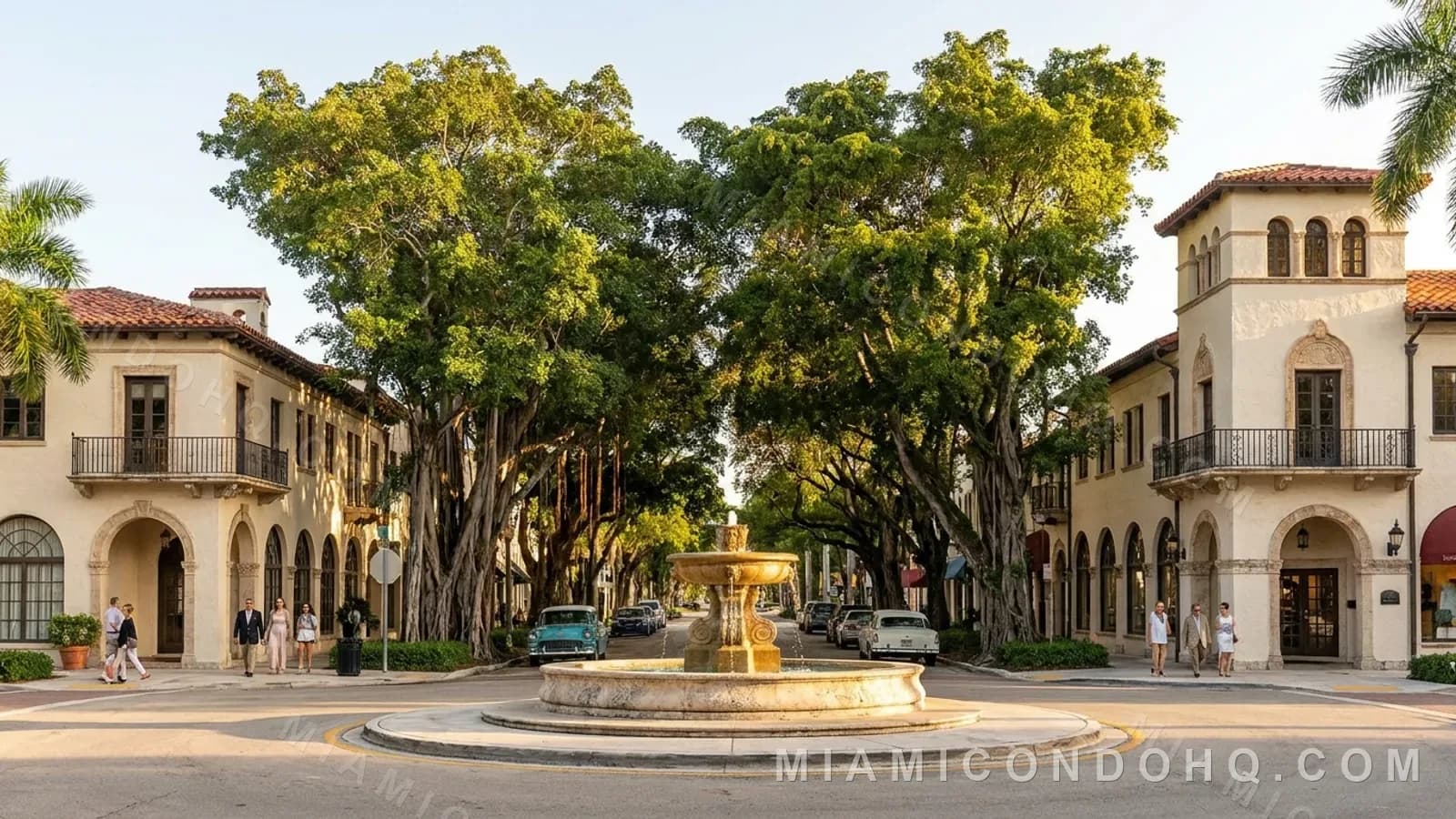
Coconut Grove is Miami's oldest neighborhood, and it grew the way old places do — organically, around a sailing harbor, under a canopy of banyans that predates almost everything else in the city. Its texture is bohemian-turned-polished: a walkable village center around CocoWalk, bayfront parks and marinas, and streets that bend with the trees rather than the grid. Coral Gables was the opposite kind of birth: George Merrick's master-planned "City Beautiful" of the 1920s, laid out around Mediterranean Revival architecture, the Biltmore Hotel and the shopping spine of Miracle Mile. The Grove evolved; the Gables was designed. Both wear their history well, but you can feel the difference on every block — the Grove is looser and greener, the Gables more formal and composed.
The bay changes everything
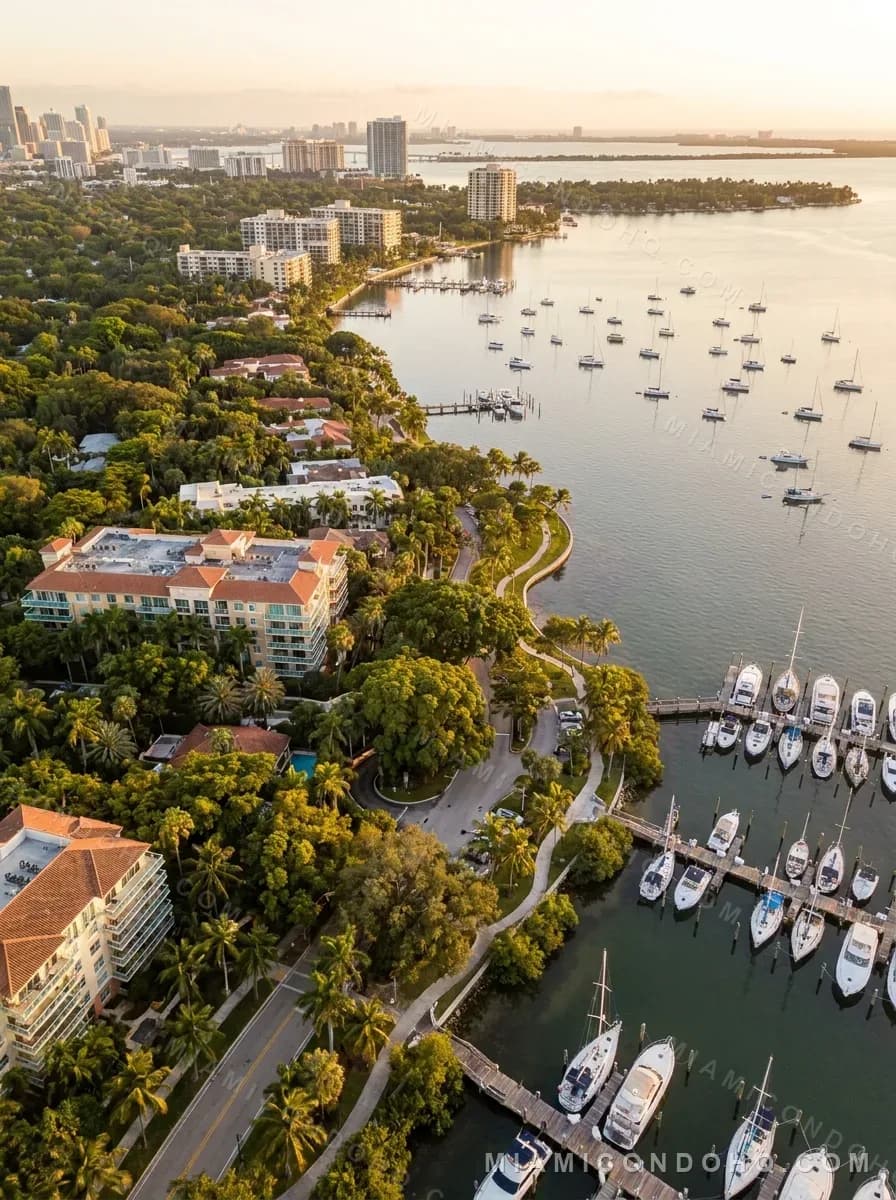
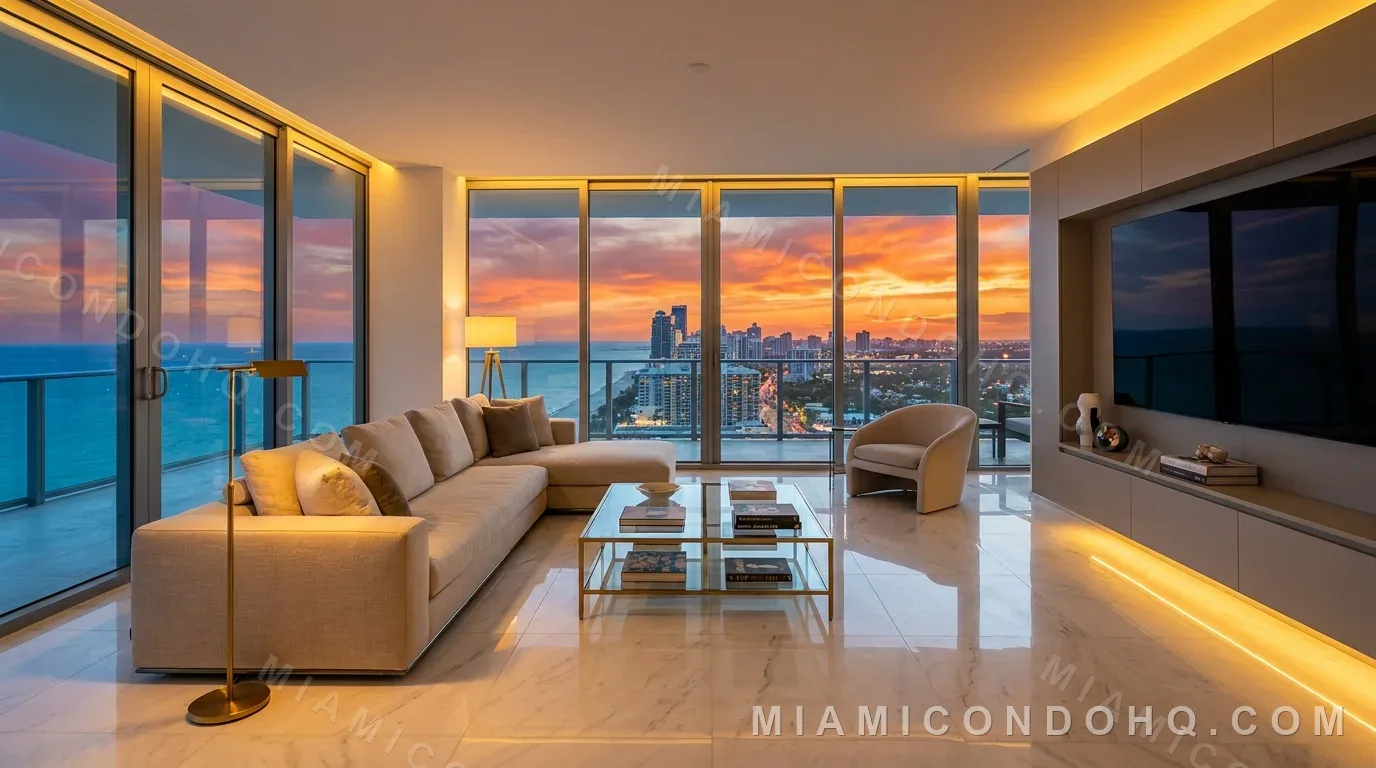
The single biggest practical difference is water. Coconut Grove fronts Biscayne Bay, and its daily life leans into it — sailboats off Dinner Key, waterfront parks, and condo towers whose entire pitch is the view across the water. Coral Gables, for all its beauty, is essentially an inland city at the condo level: its residential buildings cluster around the walkable downtown Gables core, and what you buy is boulevard, canopy and Mediterranean detail rather than a bay panorama. If a water view from the living room is non-negotiable, the Grove answers the question by itself. If what you want is a polished urban village where the payoff is what is downstairs rather than what is out the window, the Gables competes on even terms.
What the buildings look like
Compare the specific properties within each neighborhood instead of treating every residential development as condominium inventory. Our Grove profiles include Park Grove, Vita at Grove Isle and the marketed Four Seasons project, each with its own development and source notes. In Coral Gables, Villa Valencia is a condominium profile. The Plaza Coral Gables is useful neighborhood context, but its operator offers The Reserve apartments and Galiano Townhomes for lease; it should not be presented as another condo purchase option.
Schools, commutes and daily life
The two neighborhoods draw a similar buyer — families and executives who could afford Brickell but do not want to live inside its intensity — and both deliver on schools, with some of the area's most sought-after public and private options split between them. The University of Miami anchors the Gables' southern side and adds a steady professional and academic population. Commutes are comparable: both sit south of the urban core with reasonable access to Brickell and downtown, and both are places people move to on purpose rather than by default. The daily-life difference is texture. The Grove's evenings happen outdoors — the harbor, the parks, the village. The Gables' happen along its restaurant blocks and in its courtyards. Neither is wrong; they are simply different speeds of calm.
The numbers, labeled honestly
Compare a specific Coconut Grove condominium with a specific Coral Gables condominium using the same measurement basis. Review condition, outdoor space, parking and recurring charges. The Plaza Coral Gables offers rental residences and should not be used as a condominium purchase comparable.
How to choose
Buy in Coconut Grove if the water is part of the purchase — the view, the harbor, the bayfront park life — and you are willing to pay the premium that scarcity commands. Buy in Coral Gables if what you value is the composed, walkable, Mediterranean version of the same civilized life, and you would rather put the difference into square footage or keep it entirely. Tour both in one afternoon; they are ten minutes apart, and the choice tends to make itself somewhere between the marina and Miracle Mile.
Questions buyers ask about Coconut Grove and Coral Gables
Which is more expensive, Coconut Grove or Coral Gables?
A reliable answer needs dated evidence for the exact residences being compared. Compare a specific Coconut Grove condominium with a specific Coral Gables condominium using the same measurement basis. Review condition, outdoor space, parking and recurring charges. The Plaza Coral Gables offers rental residences and should not be used as a condominium purchase comparable.
Can you get a water view in Coral Gables?
Not really, at the condo level. For all its beauty the Gables is essentially an inland city where residential buildings cluster around the walkable downtown core, so what you buy is boulevard, canopy and Mediterranean detail rather than a bay panorama. Coconut Grove fronts Biscayne Bay, with sailboats off Dinner Key and towers whose entire pitch is the view across the water.
How did the two neighborhoods develop differently?
The Grove evolved; the Gables was designed. Coconut Grove is Miami's oldest neighborhood and grew organically around a sailing harbour under a canopy of banyans, with streets that bend with the trees rather than the grid. Coral Gables was George Merrick's master-planned City Beautiful of the 1920s, laid out around Mediterranean Revival architecture, the Biltmore Hotel and the shopping spine of Miracle Mile.
What are starting points for comparing buildings?
Review the individual profiles for Park Grove, Vita at Grove Isle and Four Seasons in Coconut Grove, and Villa Valencia in Coral Gables. Read each project’s status and source notes. The Plaza Coral Gables operates rental residences within a mixed-use destination and should not be included as condominium purchase inventory.
Which has better schools?
Both deliver, with some of the area's most sought-after public and private options split between them, and the two draw a similar buyer — families and executives who could afford Brickell but do not want to live inside its intensity. The University of Miami anchors the Gables' southern side and adds a steady professional and academic population.
Miami availability
Miami Condo HQ has no live Miami MLS feed. Sample listings do not establish availability or transaction prices. Use /contact to request an introduction to a licensed partner agent for the residence you are researching.
Sources and review scope
Sources checked 2026-09-06. The notes identify which facts each publication supports.
- Published property identity — The Plaza Coral Gables
The exact Plaza development combines office, retail, hotel and rental housing. Its operating residential offer is leasing; no individual condominium offering was established. Preserve broader neighborhood context only if intentionally useful, not as condominium purchase inventory.

Written by
Miami Condo HQ
Real-estate research publisher
Miami Condo HQ is published by Eltherion, LLC to help readers research Miami buildings, neighborhoods and real-estate decisions. We publish source notes, ownership guides and practical tools, and help readers request introductions to licensed partner agents. We are not a licensed brokerage.