What actually makes a residence branded
A branded residence is a condominium that carries an outside company's name under an agreement with the developer. That is the whole definition, and it is looser than most buyers assume. The brand may operate the building with its own staff, or it may contribute interior design and license its name while a conventional management company handles the day-to-day. Both arrangements produce a tower with a famous name on the door, and from the sidewalk they are indistinguishable.
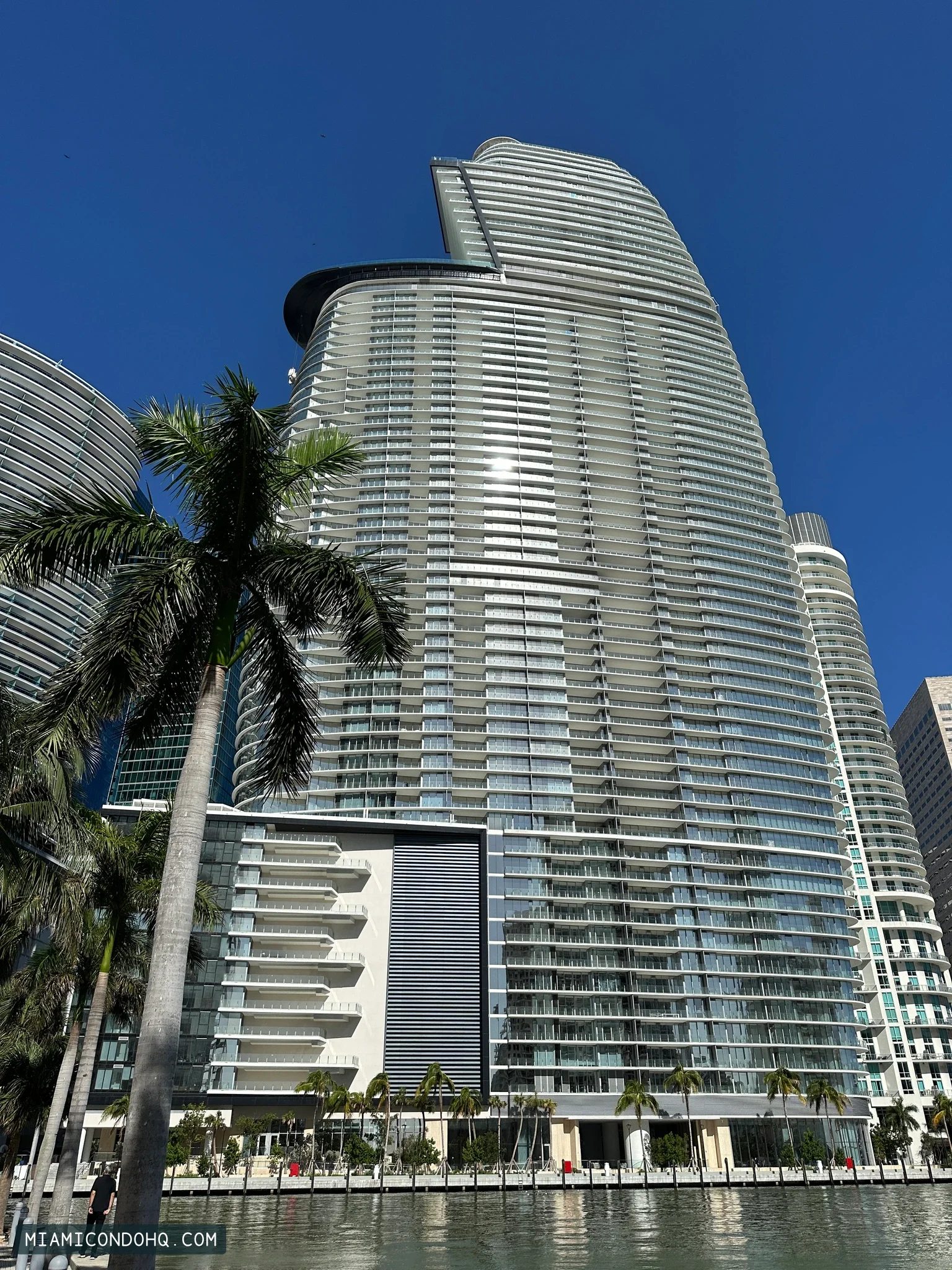
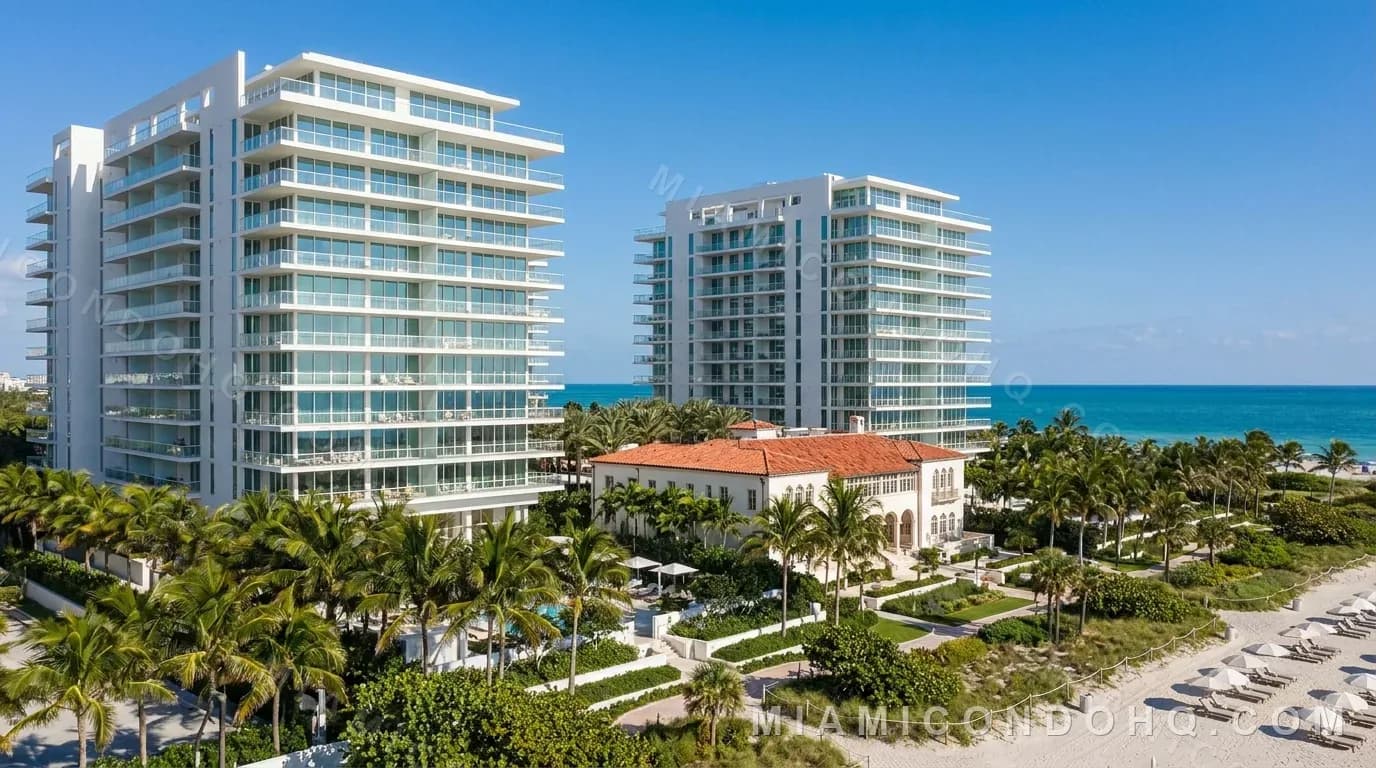
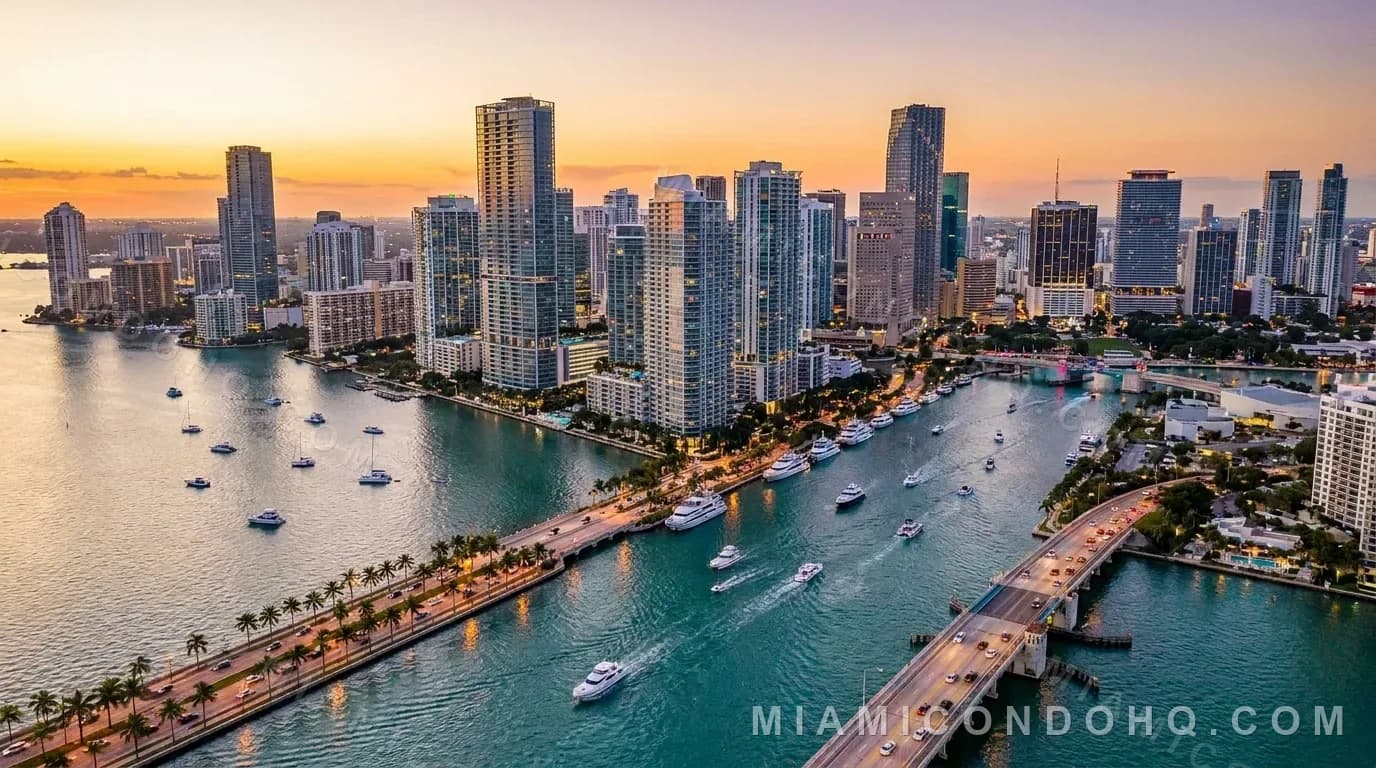
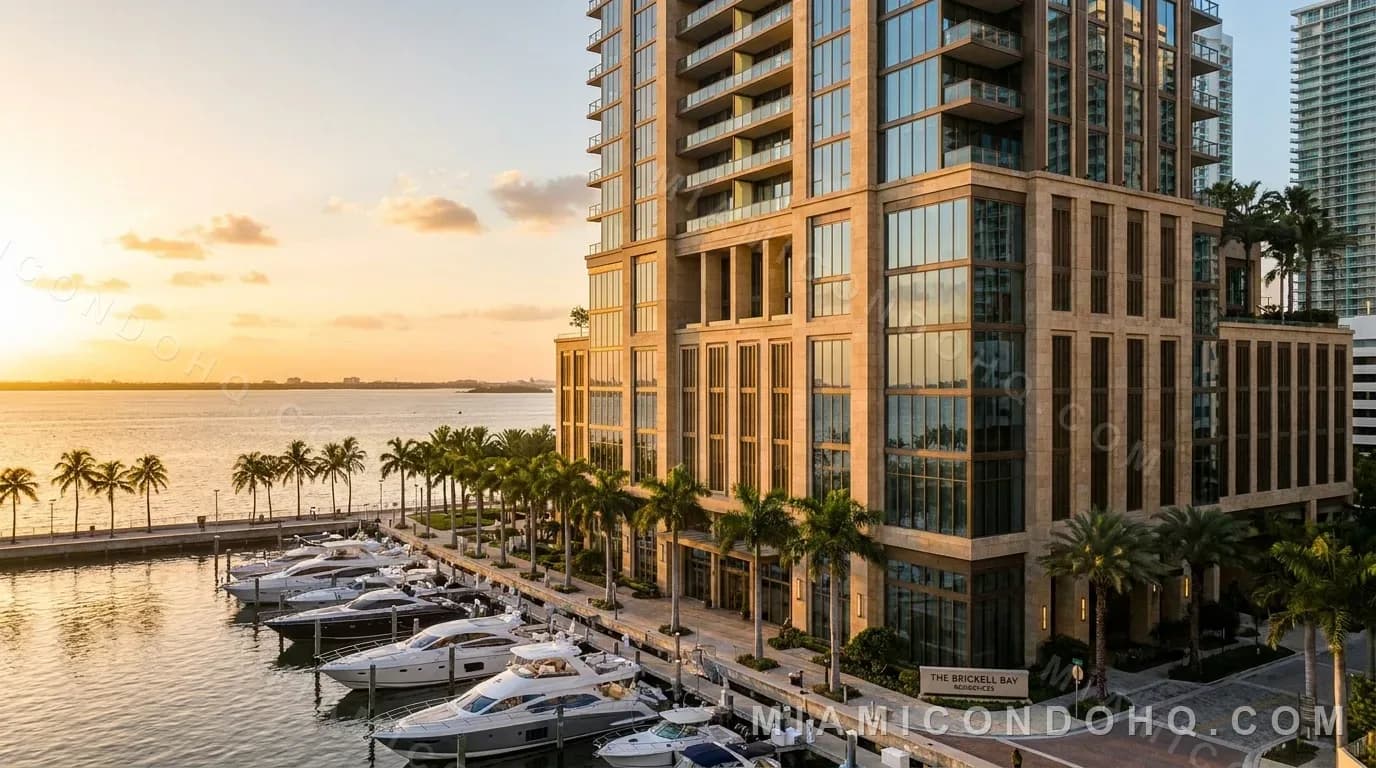
Miami now has an unusual density of them. Within our directory alone there is a Robert A.M. Stern tower at 1809 Brickell Avenue carrying the St. Regis name, an 80-story Arquitectonica building at 1420 S Miami Avenue under Cipriani, a 66-story Aston Martin tower at 300 Biscayne Boulevard Way, and a Richard Meier project at 9011 Collins Avenue operating as Four Seasons. Different brands, different models, one category.
What the brand contractually delivers, and what it does not
The useful question is not whether a building is branded but what the brand is obligated to do. In an operated building, the brand supplies staff, service standards and a management structure — that is its actual business. In a licensed building, the brand's obligation may be largely limited to design input and the use of its name.
Neither arrangement is disclosed on the sales floor in those terms. It lives in the operating or licensing agreement, and that agreement is what you are really buying alongside the square footage. A brand name is not a warranty of service level, and service standards described in marketing material are not necessarily enforceable by an individual owner.
Where the premium shows up
Branded towers generally price above their neighborhood's average per square foot. The premium covers the licensing fee, the design pedigree, the amenity program, and in operated buildings a staffing model considerably deeper than a conventional condo's. It frequently shows up in the monthly dues as well, because a service level that justifies the name has to be funded every month, not just at closing.
Our directory's per-building ranges are estimates rather than live quotes, and they move. For a branded-versus-unbranded comparison, identify the exact residence and the contract granting any branded services. Compare the current charge schedule, separate service fees and agreement term, alongside dated sales for similar homes. A brand name alone does not quantify a resale premium.
What happens if the brand leaves
This is the risk most buyers never ask about. Brand agreements run for a defined term and can expire, be terminated, or fail to renew. When that happens the name comes off the building, the associated service structure usually goes with it, and the marketing premium a buyer paid for may not survive into resale.
It is not a hypothetical anywhere in the category, and it is the single most important clause to have your attorney read. Ask how long the agreement runs, what triggers termination, who decides on renewal, and what the association's rights are if the brand walks.
Living in one day to day
In an operated building the practical difference is real: a staffed front desk that behaves like a hotel's, in-residence services you can call for, and a maintenance culture set by an operator whose name is on the door. Residents who value that tend to value it a great deal.
In a licensed building the day-to-day is closer to any well-run luxury condominium — which may be exactly what you want, at a price that reflects design rather than staffing. The mistake is assuming the two feel the same because the marketing does.
The questions that decide it
Before you pay a brand premium, confirm four things in writing. How long does the brand agreement run and what happens when it ends. Which services are contractual and which are discretionary. What the brand fee costs and where it appears in the budget. Whether any rental program is optional or mandatory, and how leasing is restricted in the declaration.
Then read the building the way you would read any Florida condominium: the declaration, the budget, the reserve study, and the milestone inspection and structural integrity reserve study status. A famous name does not exempt a tower from Florida's reform-era obligations, and the buildings that handle those obligations well are worth more than the ones with the better logo. For a branded-versus-unbranded comparison, identify the exact residence and the contract granting any branded services. Compare the current charge schedule, separate service fees and agreement term, alongside dated sales for similar homes. A brand name alone does not quantify a resale premium.
Questions buyers ask about branded residences
What makes a Miami condo a branded residence?
It is a condominium carrying an outside company's name under an agreement with the developer, and that definition is looser than most buyers assume. The brand may operate the building with its own staff, or it may contribute interior design and license its name while a conventional management company handles the day-to-day. From the sidewalk the two arrangements are indistinguishable.
Do branded residences cost more than comparable Miami condos?
Generally yes, above the neighborhood's average per square foot. The premium covers the licensing fee, the design pedigree, the amenity program and, in operated buildings, a staffing model considerably deeper than a conventional condo's. It often shows up in the monthly dues too, because a service level that justifies the name has to be funded every month rather than only at closing.
What happens if the brand leaves the building?
Brand agreements run for a defined term and can expire, be terminated or fail to renew. When that happens the name comes off, the associated service structure usually goes with it, and the marketing premium a buyer paid for may not survive into resale. Ask how long the agreement runs, what triggers termination, who decides on renewal and what rights the association has if the brand walks.
What should I confirm before paying a brand premium?
Four things, in writing: how long the brand agreement runs and what happens when it ends; which services are contractual and which are discretionary; what the brand fee costs and where it appears in the budget; and whether any rental program is optional or mandatory. Then read the declaration, budget, reserve study and milestone inspection status as you would for any Florida condominium.
Is a brand name a guarantee of service?
No. A brand name is not a warranty of service level, and service standards described in marketing material are not necessarily enforceable by an individual owner. What the brand is actually obligated to do lives in the operating or licensing agreement, which is what you are buying alongside the square footage.
Miami availability
Miami Condo HQ has no live Miami MLS feed. Sample listings do not establish availability or transaction prices. Use /contact to request an introduction to a licensed partner agent for the residence you are researching.

Written by
Miami Condo HQ
Real-estate research publisher
Miami Condo HQ is published by Eltherion, LLC to help readers research Miami buildings, neighborhoods and real-estate decisions. We publish source notes, ownership guides and practical tools, and help readers request introductions to licensed partner agents. We are not a licensed brokerage.