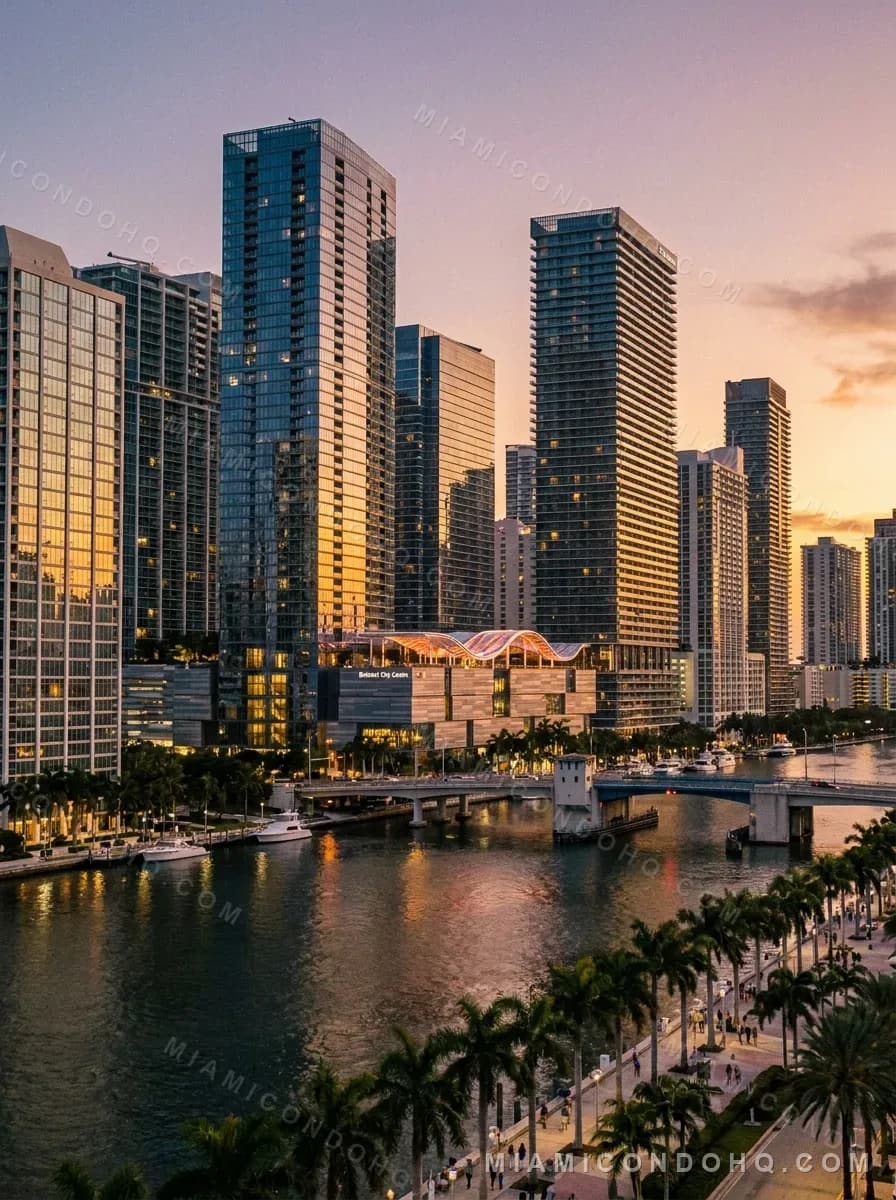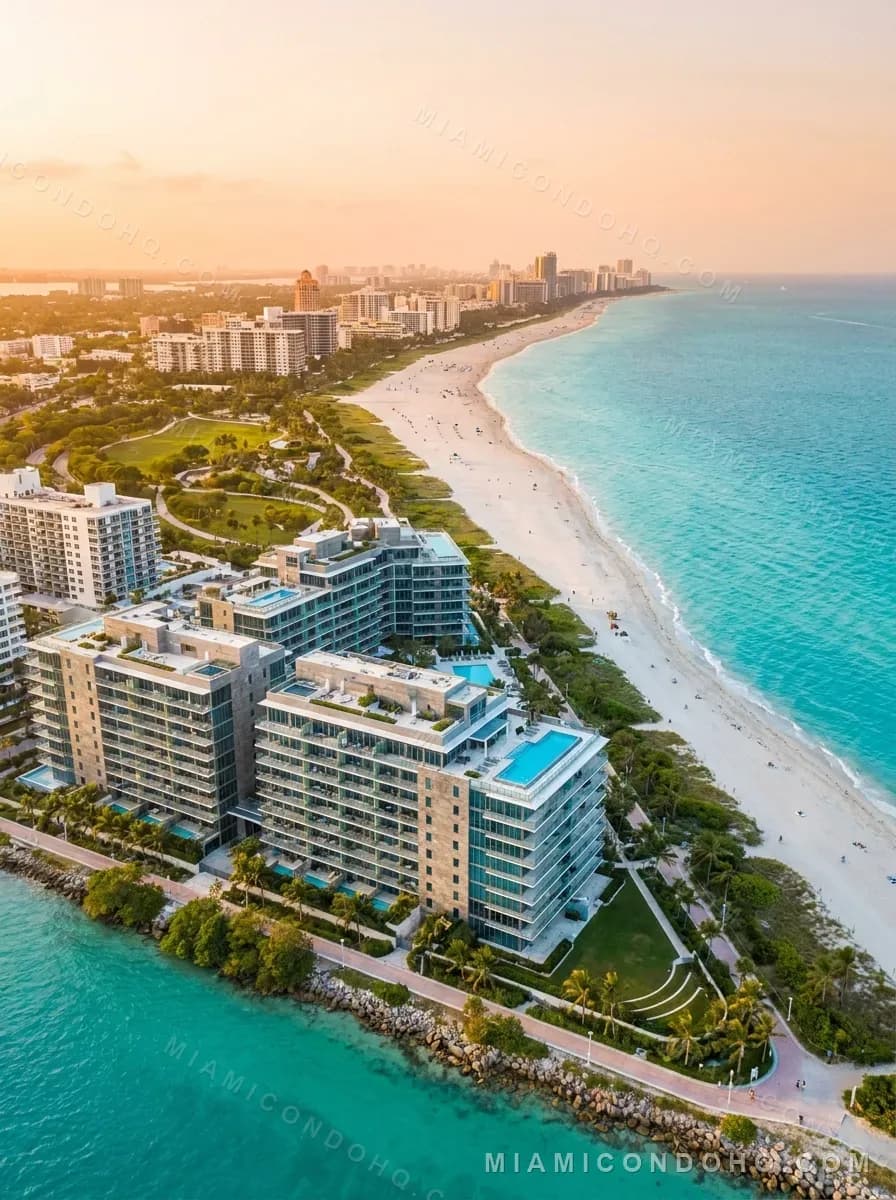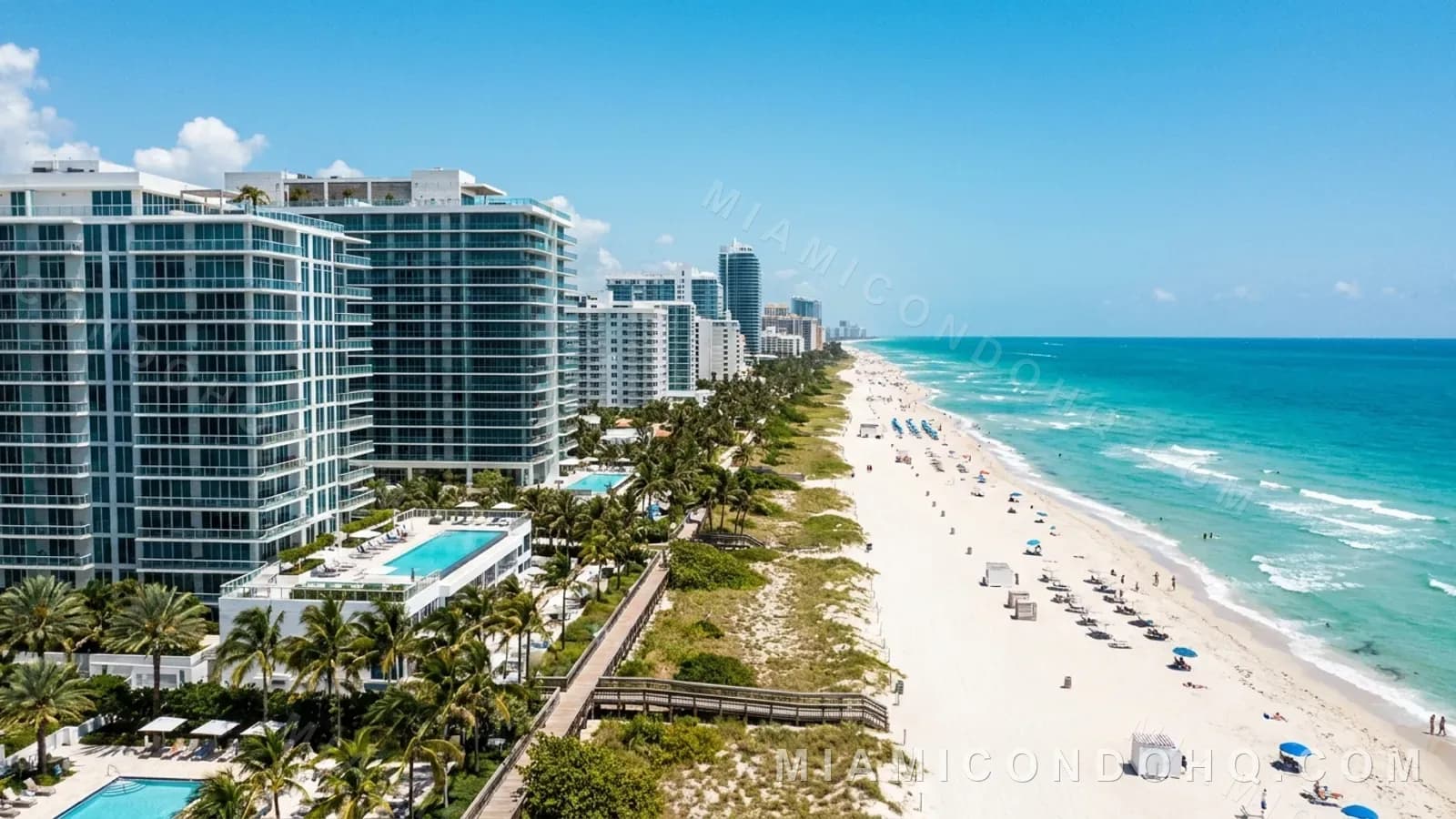
Miami Beach is not one place. The barrier island reads as a single glittering strip from the causeway, but condo buyers quickly learn it is a sequence of very different neighborhoods stacked north to south — and two of them, Mid-Beach and South Beach, get shortlisted together more than almost any other pair. They share the same ocean and the same zip-code prestige, yet they sell two opposite versions of beach living. One is design-led calm; the other is Art Deco energy and global brand recognition. Here is the honest comparison.
Two miles of beach, two different moods
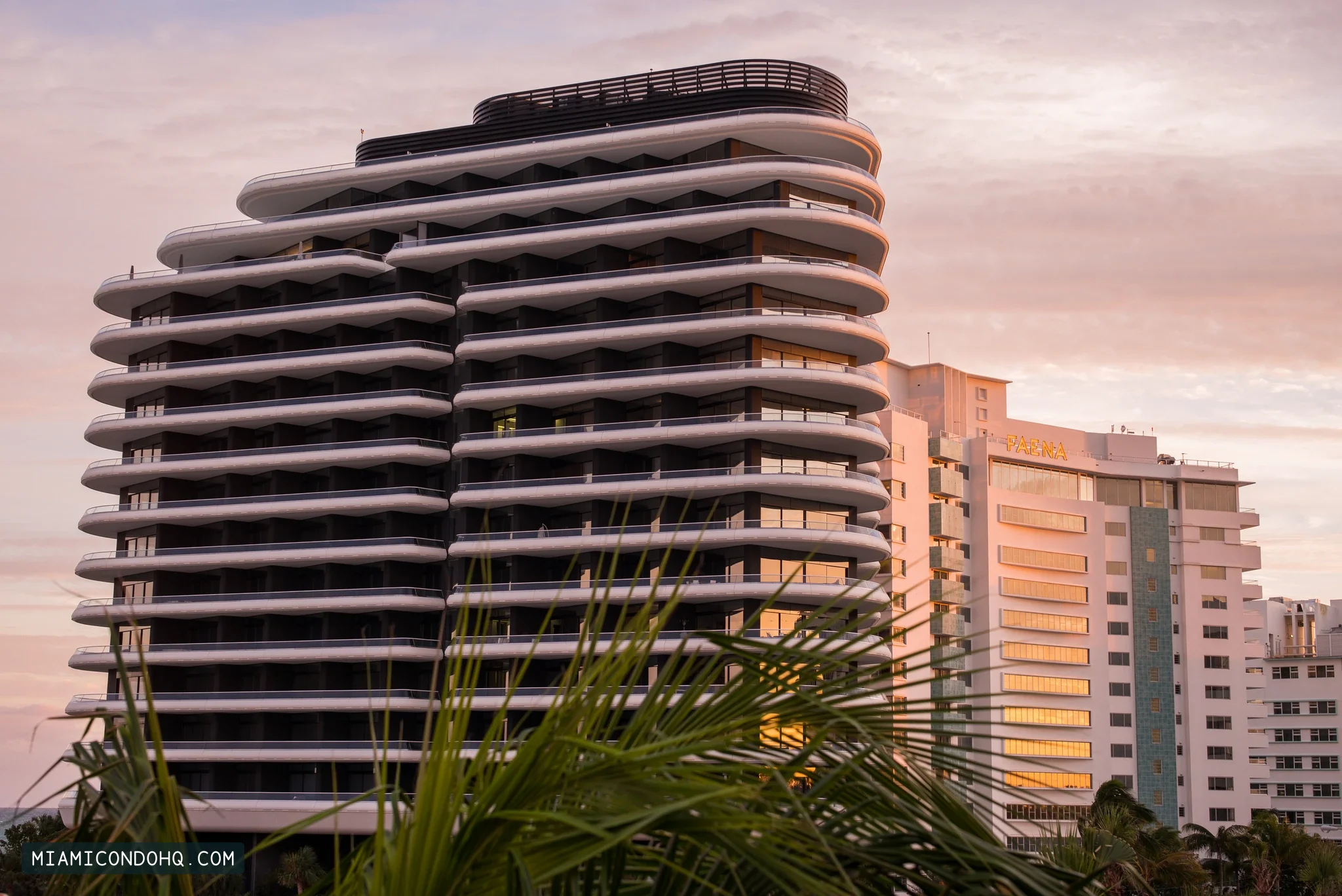
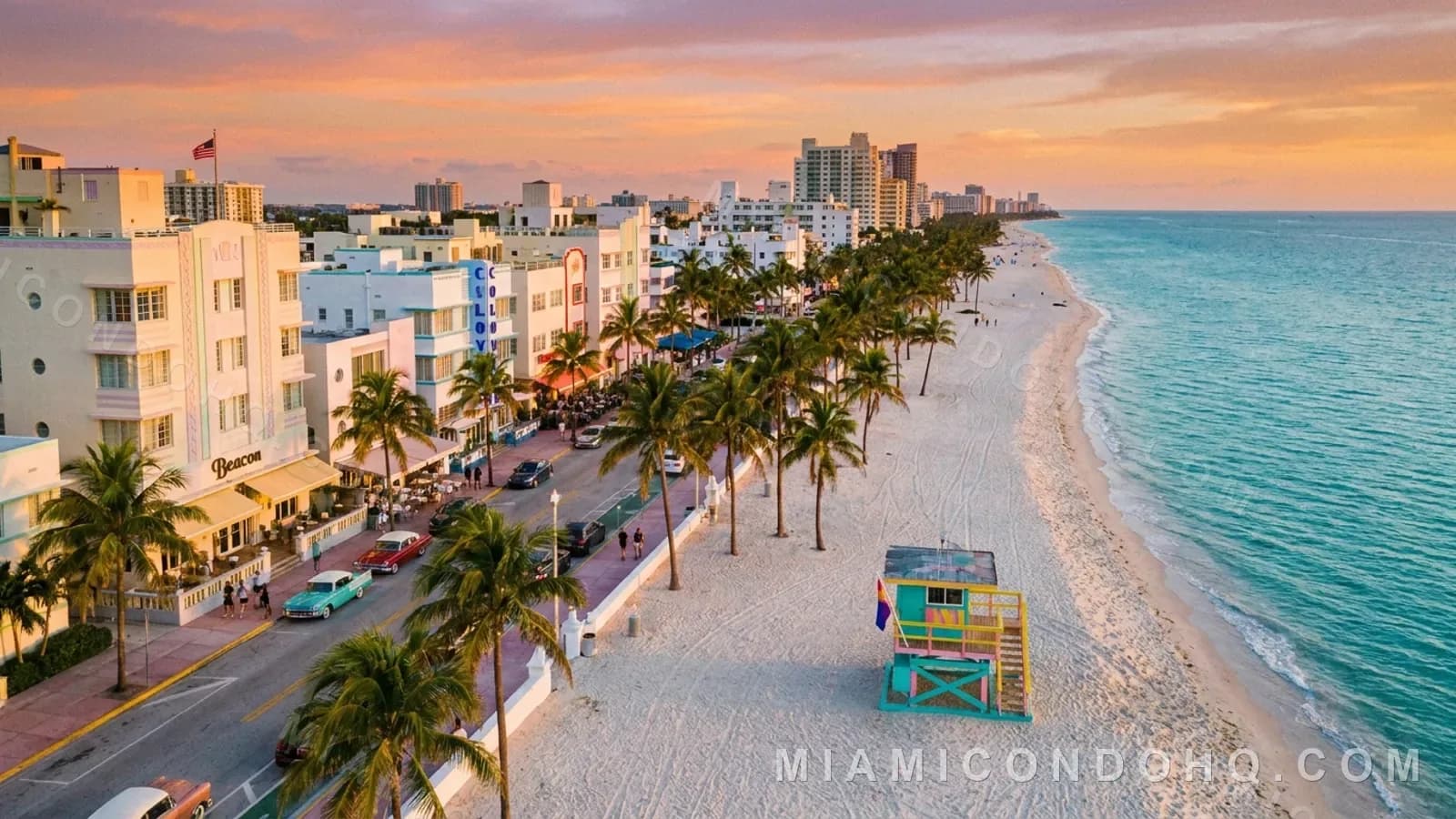
South Beach is the postcard: the Art Deco Historic District, Ocean Drive, Lincoln Road, and a nightlife and dining scene with worldwide name recognition. It is dense, walkable, loud in the best and worst senses, and built for people who want to be in the middle of it. Mid-Beach begins just north, roughly where the Faena District rises around 32nd to 36th Streets and continues up past the Eden Roc and Fontainebleau. It trades the crowds for space and design. The blocks are calmer, the towers are more architecturally deliberate, and the pitch is the ocean without the sidewalk chaos. The distance between them is a few minutes by car; the distance in daily life is much larger.
Mid-Beach: the Faena District and design-led calm
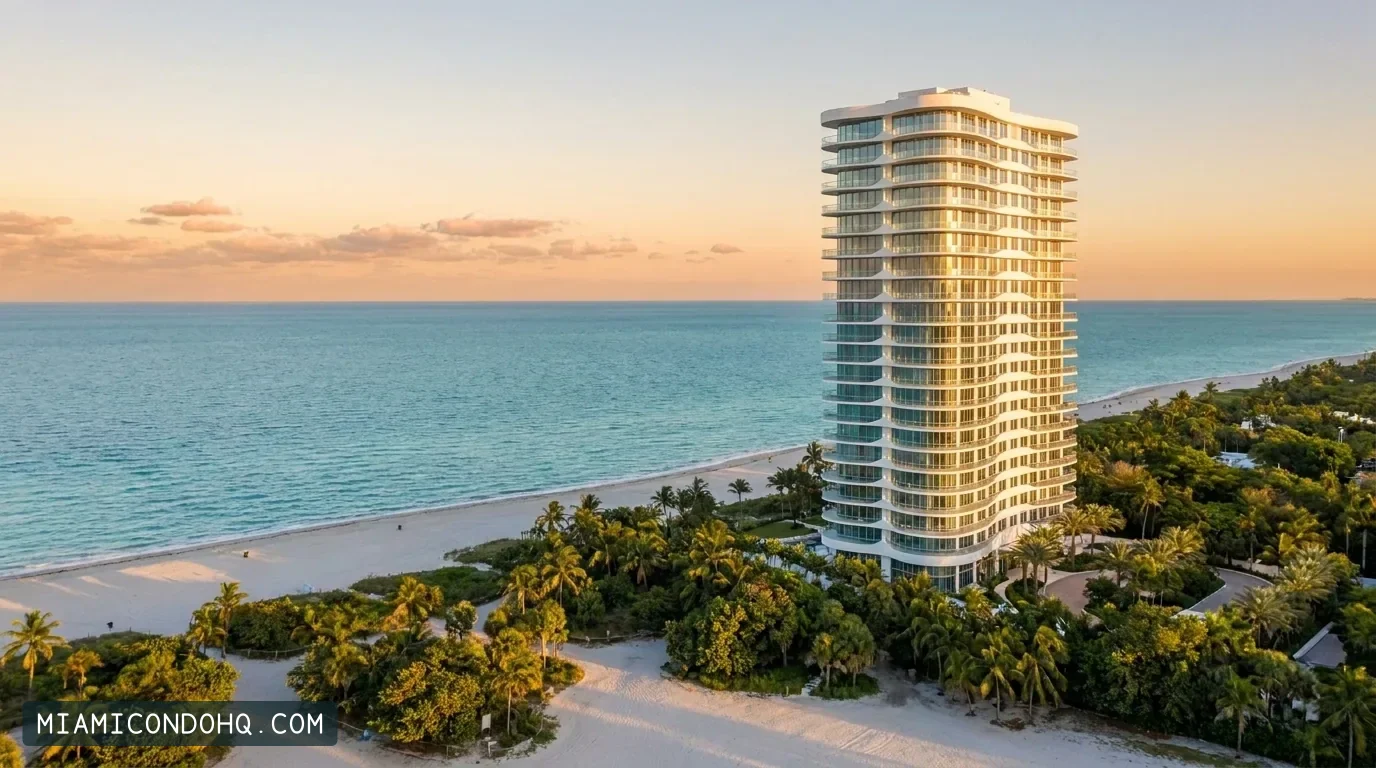
Mid-Beach's identity is the Faena District, a cultural quarter built around the arts, and its signature address is Faena House. Designed by Foster + Partners and completed in 2015, it is an 18-story, 47-residence building known for its curved "aleph" wraparound terraces — and, per our directory and widely reported at the time, the site of a record-setting Miami condo sale. It set the neighborhood's tone: low unit counts, serious architecture, and hotel-level service directly on the sand. Farther north, where Mid-Beach shades into North Beach beside Surfside, Eighty Seven Park is Renzo Piano's first U.S. residential building, an 18-story tower wrapped by a 35-acre park with curved-glass balconies and a biophilic, wellness-first design. What the Mid-Beach buildings share is scarcity and intent — they are collector's-item towers, not volume product, and that scarcity is part of the price.
South Beach: Art Deco energy and the brand premium
South Beach includes established condominium buildings and marketed residential projects. The Ritz-Carlton Residences, South Beach is presented as a 30-residence collection at 1671 Collins Avenue. Delano Residences & Hotel Miami is a separate Downtown Miami project, not a condominium conversion of the Delano Miami Beach hotel. Compare exact addresses, ownership categories and current offering documents before grouping properties by their hotel brands. See the source notes at /buildings/ritz-carlton-residences-south-beach and /buildings/delano-residences-miami.
The buildings, side by side
The clearest way to feel the difference is to compare what each neighborhood's flagships are actually selling. Mid-Beach's Faena House is a 47-home building; South Beach's Setai is 162, and its new branded towers run past 100 and 170 units. Mid-Beach optimizes for privacy and design pedigree; South Beach optimizes for service, brand and liquidity. Neither is objectively better — a low-count Foster + Partners building and a 170-unit branded hotel-residence are answers to different questions. If you value walking out your door into a scene, South Beach is built for it. If you value walking out your door into quiet, Mid-Beach is.
The numbers, labeled as estimates
Compare Mid-Beach and South Beach through specific residences with similar size, condition and actual views. Distinguish an existing condo from a marketed residential project, and review the association’s operating costs before deciding whether an address fits the same total budget.
Which one fits you
Buy in Mid-Beach if what you want is design, privacy and the Faena District's calm, and you are comfortable paying the per-foot premium that scarcity commands. Buy in South Beach if you want the brand, the walkability and the deep, liquid resale and rental market that worldwide recognition creates — and you can live with the energy that comes attached. Tour both in one afternoon; they are minutes apart, and somewhere between the Faena District's quiet and Ocean Drive's noise, the choice usually makes itself.
Questions buyers ask about Mid-Beach and South Beach
What is the price difference between Mid-Beach and South Beach?
A reliable answer needs dated evidence for the exact residences being compared. Compare Mid-Beach and South Beach through specific residences with similar size, condition and actual views. Distinguish an existing condo from a marketed residential project, and review the association’s operating costs before deciding whether an address fits the same total budget.
Why is South Beach's median lower if its top buildings compete on price?
Because South Beach has far more inventory across a much wider range, from Deco studios to oceanfront penthouses, which pulls its median down. Our directory lists roughly two dozen Mid-Beach buildings against more than fifty in South Beach, so Mid-Beach reads as a thinner, higher-floor market rather than a uniformly dearer one.
What defines Mid-Beach?
The Faena District, a cultural quarter built around the arts, and a housing stock of low unit counts and serious architecture directly on the sand. Its signature address is Faena House, an 18-story, 47-residence Foster + Partners building completed in 2015 and known for its curved aleph wraparound terraces. Farther north, Eighty Seven Park is Renzo Piano's first U.S. residential building, wrapped by a 35-acre park.
What new branded condos are being marketed in South Beach?
The official Ritz-Carlton South Beach fact sheet describes 30 residences at 1671 Collins Avenue. Its development terms and hotel-access arrangements need a document review; our research does not establish a completion date. Delano’s residential project belongs to Downtown Miami and should not be counted as new South Beach condo supply. Check the linked building source notes before using either project in a shortlist.
Which should I choose?
Mid-Beach if what you want is design, privacy and the Faena District's calm, and you are comfortable paying the per-foot premium that scarcity commands. South Beach if you want the brand, the walkability and the deep, liquid resale and rental market that worldwide recognition creates, and you can live with the energy that comes attached. They are minutes apart, so touring both in one afternoon usually settles it.
Miami availability
Miami Condo HQ has no live Miami MLS feed. Sample listings do not establish availability or transaction prices. Use /contact to request an introduction to a licensed partner agent for the residence you are researching.

Written by
Miami Condo HQ
Real-estate research publisher
Miami Condo HQ is published by Eltherion, LLC to help readers research Miami buildings, neighborhoods and real-estate decisions. We publish source notes, ownership guides and practical tools, and help readers request introductions to licensed partner agents. We are not a licensed brokerage.