Two ways to buy the same skyline
Buying a Miami condo comes down to an early fork: a brand-new tower sold before it exists, or an existing unit you can walk through this weekend. Both put you in the same neighborhoods and often on the same streets, but they are different products bought on different clocks, with different risks and different costs. Preconstruction is a purchase made against a rendering and a delivery date; resale is a purchase of a known, deliverable home. Neither is universally better. The right answer depends on your timeline, your tolerance for uncertainty, and how much you value new-everything against knowing exactly what you are getting. This guide lays out the honest trade-offs so you can pick on purpose.
What you actually pay, and when
The headline difference is cash flow. A resale purchase follows the familiar path: offer, deposit, inspection, financing and a closing usually inside 30 to 60 days, after which you own and occupy. Preconstruction stretches that timeline over years and front-loads it with deposits. You are buying at a price the developer sets and raises through successive release tiers as the building sells out, so an early buyer in a strong launch can see paper appreciation before delivery, or carry the risk if the market softens before closing. Resale prices, by contrast, reflect what buyers will pay right now for an existing unit with a known HOA and a real comparable history. Compare the developer’s actual contract, deposit schedule and specification with the resale’s inspection findings, adopted budget and dated comparable sales.
Deposits, deposits, deposits
This is the trade-off buyers underestimate. A resale deposit is typically a modest percentage held in escrow for a few weeks. Preconstruction in Florida works differently: developers collect a large share of the purchase price in staged deposits, taken at contract, at groundbreaking, and at construction milestones, long before you can move in or rent the unit out. That money is committed and, depending on the contract and how the developer is permitted to use it, only partly protected, which is why understanding how Florida guards preconstruction deposits matters before you sign. The practical effect is that preconstruction ties up capital for years with no use of the home and no rental income, while resale converts your cash into an occupied, income-capable asset almost immediately.
The warranty, the reserves, and the surprise math
New construction arrives under the latest building codes, with a developer warranty on the structure and systems and reserves that start funded from the first budget. That matters in post-Surfside Miami, where structural integrity and reserve funding are now central to how buyers judge a building's health. A resale building carries history instead: you can read its actual reserve study, its recent budgets, and any special-assessment record before you buy. The catch is that older towers eventually face Florida's milestone structural inspections and reserve-study requirements, and an underfunded association can hand a new owner a special assessment. New towers will not reach those age thresholds for decades, but their long-run HOA dues are an estimate until occupancy stabilizes and the real operating costs are known.
Timing, uncertainty, and the deliverable unit
Resale's biggest advantage is certainty. You tour the exact unit, in the exact light, with the exact view and finishes, and you close on a schedule you largely control. Preconstruction asks you to trust a floor plan, a finish board and a completion date that can slip. Delivery delays are common, market conditions can change between contract and closing, and the finished product occasionally differs from the renderings that sold it. Buyers who need a home now, or who want to underwrite a rental against a specific known unit, are usually better served by resale. Buyers who are patient, want the newest product, and are comfortable with construction-timeline risk are the natural preconstruction audience.
Customization versus knowing exactly what you get
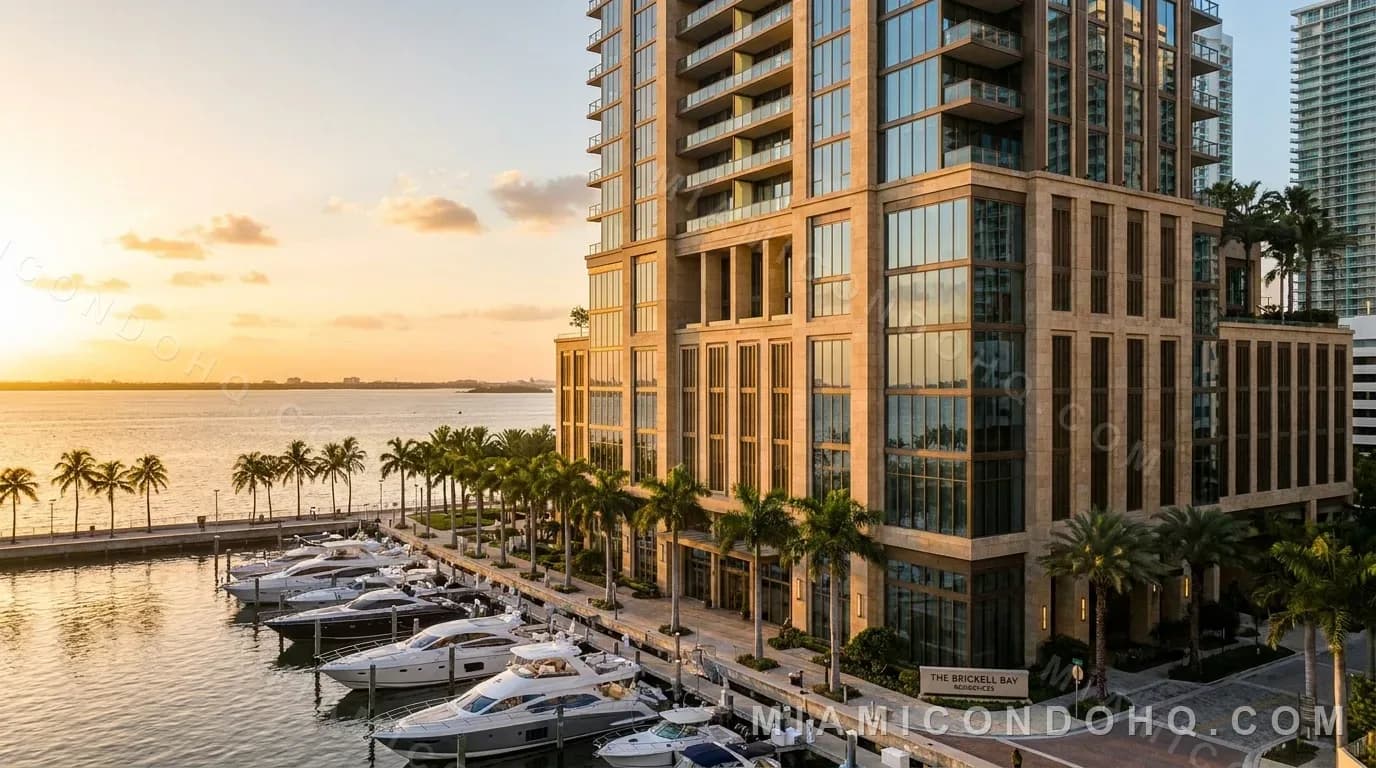
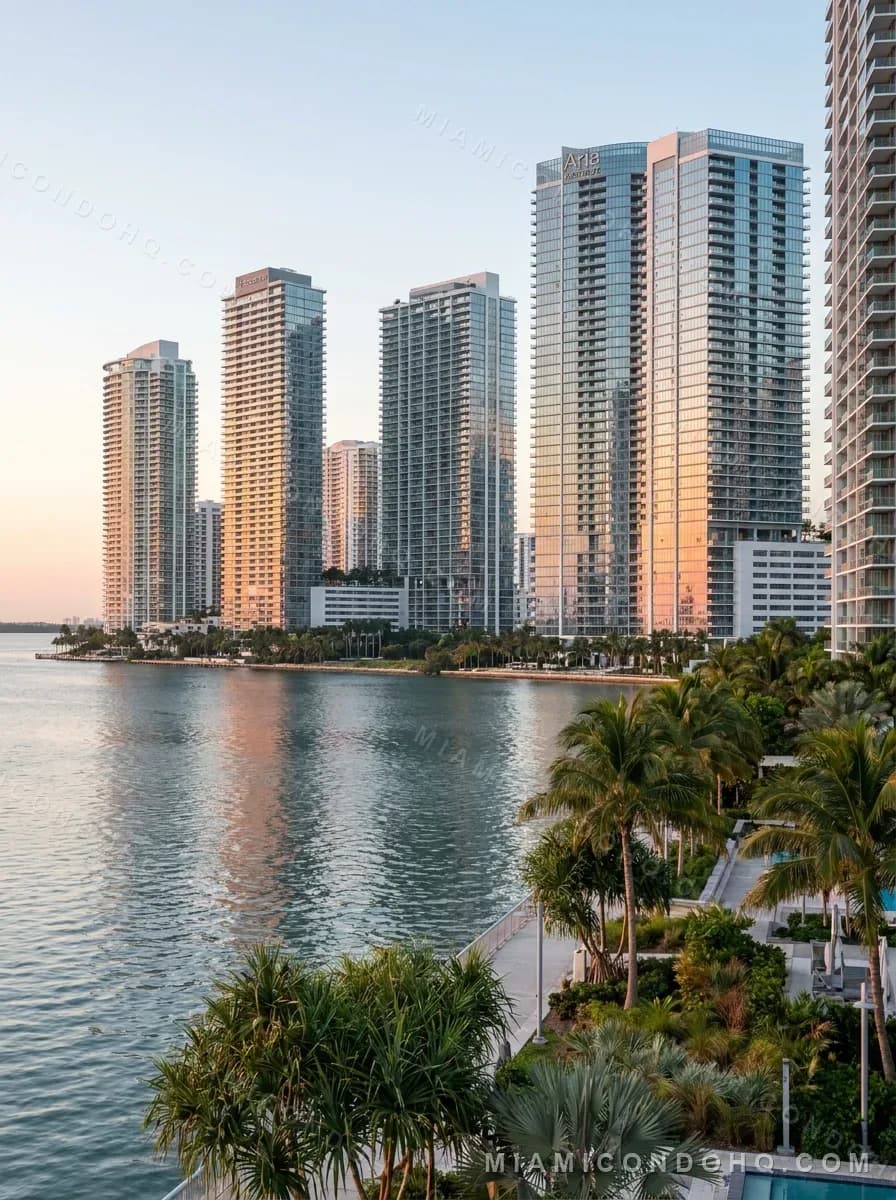
Early preconstruction buyers can sometimes select finishes, combine units or influence a layout in ways a resale purchase never allows, because they are buying before the concrete is poured. Resale offers the opposite comfort: no guesswork. What you see is what you own, and any changes are renovations you scope and price yourself. Edgewater is the clearest place to watch this contrast play out, as the city's bayfront new-construction laboratory sits beside plenty of recent resale stock, while Brickell offers deep inventory of both. Our building profiles for towers like Aria Reserve and Missoni Baia in Edgewater, or the St. Regis Residences Miami in Brickell, show the new-construction end; the resale market fills in around them.
So which one is right for you
If you want to move in now, buy against known dues and a real reserve study, and negotiate on an actual comparable, resale is the honest fit. If you want brand-new everything, code-current construction, the chance to buy early in a rising release schedule, and you can wait years while staged deposits sit committed, preconstruction rewards that patience. Most buyers are better served by matching the product to their timeline than by chasing whichever one the market happens to be talking about this month. Compare the developer’s actual contract, deposit schedule and specification with the resale’s inspection findings, adopted budget and dated comparable sales.
Questions buyers ask about new construction and resale
How do the deposits differ between preconstruction and resale?
Substantially. A resale deposit is typically a modest percentage held in escrow for a few weeks, while Florida preconstruction developers collect a large share of the purchase price in staged deposits taken at contract, at groundbreaking and at construction milestones — long before you can move in or rent the unit out. That capital is committed for years with no use of the home and no rental income.
How long does each take to close?
A resale purchase follows the familiar path of offer, deposit, inspection, financing and a closing usually inside 30 to 60 days, after which you own and occupy. Preconstruction stretches that over years, and delivery delays are common enough that the completion date should be treated as an estimate rather than a promise.
Which has more predictable HOA dues?
Resale. An existing building lets you read its actual reserve study, its recent budgets and any special-assessment record before you buy. A new tower's long-run dues remain an estimate until occupancy stabilises and the real operating costs are known, even though its reserves start funded from the first budget.
Does new construction avoid Florida's inspection requirements?
Only for a long while, not permanently. New towers arrive under the latest building codes and will not reach Florida's milestone structural inspection and reserve-study age thresholds for decades. Older resale towers eventually do reach them, and an underfunded association can hand a new owner a special assessment.
Can I customise a preconstruction unit?
Sometimes. Early buyers can occasionally select finishes, combine units or influence a layout in ways a resale purchase never allows, because they are buying before the concrete is poured. Resale offers the opposite comfort — what you see is what you own, and any changes are renovations you scope and price yourself.
Miami availability
Miami Condo HQ has no live Miami MLS feed. Sample listings do not establish availability or transaction prices. Use /contact to request an introduction to a licensed partner agent for the residence you are researching.

Written by
Miami Condo HQ
Real-estate research publisher
Miami Condo HQ is published by Eltherion, LLC to help readers research Miami buildings, neighborhoods and real-estate decisions. We publish source notes, ownership guides and practical tools, and help readers request introductions to licensed partner agents. We are not a licensed brokerage.