Current numbers, November 21, 2026
Condos listed on the MLS right now, refreshed every six hours.
| Neighborhood | For sale | Median asking | Median $/sq ft | For rent | Median rent |
|---|---|---|---|---|---|
| South Beach | 695 | $390K | $582 | 581 | $3,500/mo |
| Edgewater | 457 | $785K | $732 | 246 | $4,300/mo |
Medians appear only when enough listings publish the figure; a dash means too few to report. Full neighborhood reports
A Florida condo estoppel certificate is the association's signed statement of what a unit owes and what stands between the unit and a transfer. Section 718.116(8) of the Florida Statutes requires the association to issue it within 10 business days of a written or electronic request, and DBPR's current schedule caps the standard fee at $299.
This guide works from the 2026 Florida Statutes text of section 718.116(8) and the fee schedule of the Department of Business and Professional Regulation (DBPR), both read on November 16, 2026, and covers condominiums only. Miami Condo HQ is published by Eltherion, LLC, a research publisher, not an association, manager or brokerage. The other closing charges are mapped at /blog/miami-condo-closing-costs-escrow-title.
Who can ask for one, and where the request goes
The statute names four parties who may make the request: the unit owner, the owner's designee, a unit mortgagee, or the mortgagee's designee. In a resale the designee is often the closing agent or title company, which is why many buyers never see the request go out.
Each association must designate on its website a person or entity, with a street or email address, to receive requests, and must deliver the certificate by hand, regular mail or email on the date it is issued. A board member or an authorized agent or representative may complete it, and the statute says that includes an authorized management company employee, so a reply from a document service or a manager's office is normal.
Get the condo documents checklist by email
The documents to request before you buy, and the question each one should answer.
By signing up you agree to receive one email from Miami Condo HQ with the Miami condo document checklist. No mailing list. We use your address only for these emails. Privacy policy.
What the statutory form must say
The statute prescribes the form's contents. It opens with identification: the date of issuance, the owners' names as the association's books show them, the unit designation and address, any parking or garage space number, the fee charged, the requestor's name and, if the account has been turned over to an attorney for collection, that attorney's name and contact information, for which no fee may be charged.
The assessment block states the regular periodic assessment and how often it is paid, the date it is paid through, and the due date and amount of the next installment. It must include an itemized list of all assessments, special assessments and other money owed on the date of issuance, and an itemized list of amounts scheduled to come due on each day of the certificate's effective period. In that calculation the association may assume delinquent amounts stay delinquent.
The rest of the form asks yes-or-no questions: whether a capital contribution, resale, transfer or other fee is due, with its type and amount; whether an open rule violation has been noticed to the owner in the official records; whether the rules require board approval of the transfer and whether it has been given; and whether a right of first refusal exists and has been exercised. It must also list every other association the unit belongs to, with contact information, give contact information for all insurance the association maintains, and carry an officer's or authorized agent's signature. Board approval itself is a separate process, covered at /blog/miami-condo-board-approval-process.
Thirty days, thirty-five days and the amended certificate
A certificate delivered by hand or electronically has a 30-day effective period; one sent by regular mail has 35 days. If the association learns of additional information or a mistake within that period, it may deliver an amended certificate, which becomes effective if the sale or refinancing has not been completed. An amended certificate is free, must be delivered on its date of issuance, and starts a new 30-day or 35-day period from that date.
The free amendment is not a way to extend a certificate that has run out. Ask the closing agent how the certificate was delivered and which period applies, and order a new one if closing slips past it.
What the association gives up when it signs
Paragraph (8)(c) is why closing agents insist on the certificate. The association waives the right to collect any money owed beyond the amounts stated in it from anyone who relies on it in good faith, and from that person's successors and assigns.
The protection extends only to what the certificate states. An assessment the board is still discussing and has not levied will not appear in it, so read it alongside the budget and recent board minutes, which the checklist at /research/condo-document-checklist covers.
An association that fails to deliver within 10 business days may not charge for that certificate, and paragraph (8)(e) allows a summary proceeding under section 51.011 to compel compliance, with reasonable attorney fees to the prevailing party.
Fees in the statute and on DBPR's schedule
Paragraph (8)(f) allows a reasonable fee of up to $250 when no delinquent amount is owed on the date of issue, an additional $100 when the certificate is requested on an expedited basis and delivered within 3 business days, and an additional fee of no more than $150 when the unit is delinquent. When one owner requests certificates for several units together and nothing is past due, paragraph (8)(g) caps the total at $750 for 25 or fewer units, $1,000 for 26 to 50, $1,500 for 51 to 100 and $2,500 for more than 100.
Paragraph (8)(i) adjusts those fees every 5 years by the Consumer Price Index for All Urban Consumers and has DBPR publish the adjusted amounts. DBPR's schedule, read November 16, 2026, lists not more than $299 for preparation and delivery, an additional $119 for expedited delivery within 3 business days, an additional fee not to exceed $179 for a delinquent unit, and multi-unit caps of $896, $1,194, $1,791 and $2,985 for the same four bands. DBPR says its next update will be released by July 1, 2027.
The authority to charge any fee must come from a written board resolution or a written management, bookkeeping or maintenance contract, and the fee is payable when the certificate is prepared. The statute does not say whether buyer or seller pays; the purchase contract decides.
When the sale does not close
If the certificate was requested for a sale or mortgage that does not close, a payor who is not the unit owner can recover the fee. The preparer must receive a written request, with reasonable documentation that the sale did not occur, no later than 30 days after the closing date the certificate was sought for, and must refund within 30 days of receipt. The refund is the owner's obligation, collectible like an assessment, and no contract can waive or modify the right.
Questions buyers and sellers ask about Florida condo estoppel certificates
How long does a Florida condo association have to issue an estoppel certificate?
Section 718.116(8) of the Florida Statutes gives the association 10 business days after a written or electronic request from the unit owner, a unit mortgagee or either one's designee, and an association that misses the deadline may not charge for that certificate.
How much can a Florida condo association charge for an estoppel certificate?
The statute sets a base of up to $250, plus $100 for delivery within 3 business days and up to $150 more if the unit is delinquent, adjusted every 5 years for inflation, and DBPR's published schedule, read November 16, 2026, puts those amounts at $299, $119 and $179.
How long is a Florida condo estoppel certificate valid?
A certificate delivered by hand or electronically is effective for 30 days and one sent by regular mail for 35 days, and a free amended certificate issued for new information or a mistake starts a new period on its delivery date.
What happens if the estoppel certificate leaves out money the owner owes?
Under section 718.116(8)(c) of the Florida Statutes, the association waives the right to collect amounts beyond those stated in the certificate from anyone who relies on it in good faith, and from that person's successors and assigns.
Finding the association of record before you send the request
The request should name the association by its legal name, which can differ from the building's. Our register at /condo-associations carries Florida DBPR's condominium records for Miami-Dade, and /condo-associations/in/miami and /condo-associations/in/miami-beach group them by the city on DBPR's file. Each record page gives the legal name, DBPR managing-entity number, recorded date and mailing address on file.
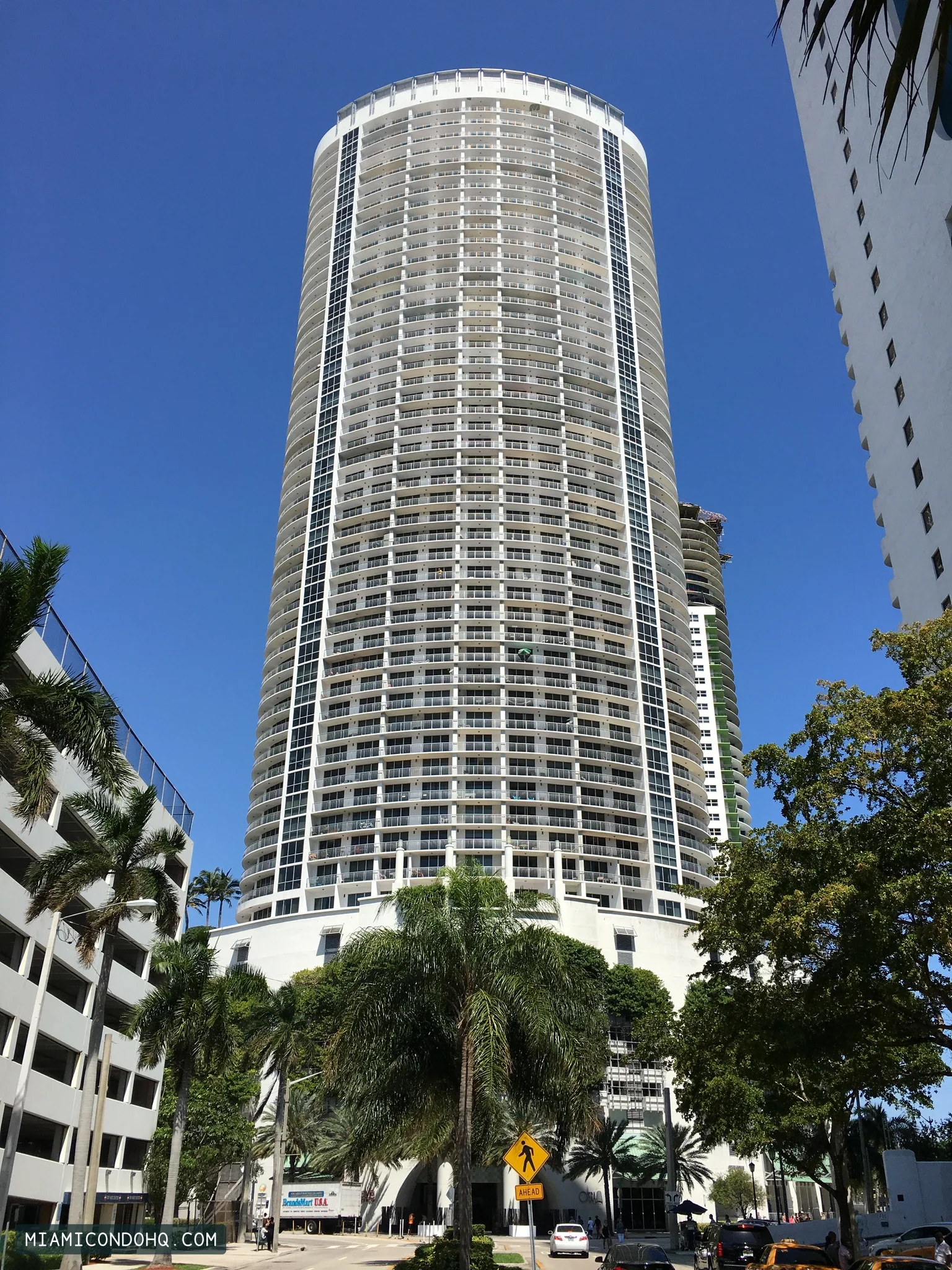
At /condo-associations/opera-tower-pr70619, Opera Tower's association is Opera Tower Condominium Association, Inc., with FirstService Residential named on the DBPR mailing line. At /condo-associations/mirador-1000-pr70648, the Miami Beach tower's association has a Doral mailing address on file. At /condo-associations/flamingo-south-beach-i-condo-pr73518, the 562-unit condominium on Bay Road is registered to Flamingo/South Beach I Condominium Association, Inc. A state mailing address can lag a change, so confirm the recipient the association designates on its website before the request goes out.
Sources and review scope
Sources checked 2026-11-16. The notes identify which facts each publication supports.
- The Florida Legislature — 2026 Florida Statutes, Section 718.116 (Assessments; liability; lien and priority; interest; collection), subsection (8), read November 16, 2026
718.116(8): certificate issued within 10 business days of a written or electronic request from the unit owner, mortgagee or either's designee; recipient designated on the association's website; delivery by hand, regular mail or email on the date of issuance; completion by a board member or authorized agent, including a management company employee. (8)(a): form contents (issuance date, owners, unit, parking space, collection attorney at no fee, fee, requestor, regular assessment and paid-through date, next installment, itemized amounts owed and scheduled to come due, transfer or capital contribution fees, open violations, board approval, right of first refusal, other associations, insurance contacts, signature). (8)(b): 30-day effective period by hand or electronic delivery, 35 days by regular mail; free amended certificate with a new period. (8)(c): waiver against good-faith reliance. (8)(d): no fee if not delivered in 10 business days. (8)(e): summary proceeding under s. 51.011 and attorney fees. (8)(f): up to $250, $100 expedited within 3 business days, up to $150 if delinquent. (8)(g): multi-unit caps of $750, $1,000, $1,500 and $2,500. (8)(h): fee authority by written resolution or contract, payable on preparation, refund to a non-owner payor when the closing does not occur. (8)(i): adjustment every 5 years by CPI-U, published by DBPR.
- Florida Department of Business and Professional Regulation — Estoppel Certificate Fees (read November 16, 2026)
Current adjusted fees for condominiums, cooperatives and HOAs: preparation and delivery not more than $299; additional $119 for expedited delivery within 3 business days; additional fee not to exceed $179 if delinquent; multi-unit aggregate caps of $896 (25 or fewer), $1,194 (26 to 50), $1,791 (51 to 100) and $2,985 (more than 100); next update to be released by July 1, 2027.
- Florida DBPR, Division of Florida Condominiums, Timeshares and Mobile Homes — condominium public records, Dade and Monroe Counties (Condo_MD.csv, as imported into the Miami Condo HQ association register, checked September 27, 2026)
Associations of record: Opera Tower Condo Assn Inc (PR70619, MA65551); Mirador 1000 Condo Assn, Inc (PR70648, MA65582); Flamingo/South Beach I Condo Assn Inc (PR73518, MA68440), 562 units at 1500 Bay Road, Miami Beach.
- Miami Condo HQ — association record pages for Opera Tower, Mirador 1000 and Flamingo South Beach I (read November 16, 2026)
DBPR mailing line for Opera Tower's association is in care of FirstService Residential, PO Box 34769, Charlotte, NC; Mirador 1000's mailing address on file is in Doral, FL 33122; Flamingo South Beach I is registered to Flamingo/South Beach I Condominium Association, Inc.
Written by
Publisher and editor, Miami Condo HQ
Miami Condo HQ is published by Eltherion, LLC. This article is not reviewed by a licensed real estate agent or broker and is not professional advice.