Florida law lets a condo owner install an electric-vehicle charging station in the parking space that comes with the unit. Section 718.113(8) of the Florida Statutes bars an association from prohibiting it, while making the owner responsible for the cost, the electricity, the licensed installation and the insurance the association may require.
First find out how your parking is actually held
The statutory right is tied to a space you control, so the first question is not electrical, it is legal. Miami condo parking is held in one of a few ways, and the recorded declaration is what says which.
A space can be a limited common element assigned to your unit, which is the most common arrangement in the towers we profile at /buildings. It can be deeded separately, appearing as its own parcel that transfers with the unit or independently of it. It can be assigned by the board from a general pool, revocably, in which case what you have is a permission rather than a property interest. Or the building can run valet-only parking with no assigned space at all, which is normal in older beachfront buildings with tight podiums.
That distinction decides everything downstream. The protection in section 718.113(8) runs to the owner's limited common element parking area or an exclusively designated space — so an owner who merely has a rotating valet arrangement has a negotiation with the board, not a statutory right. Read the declaration and the parking exhibit before you assume anything, and if you need the management company for a specific association, our directory is at /condo-associations.
What the statute takes away from the board
Where the right applies, the association may not prohibit the installation, and it may not adopt a rule that amounts to a prohibition by another name. That is the core of it, and it changed the default: before the provision existed, a board could simply decline.
What the board keeps is architectural review. It may impose reasonable standards on how the work is done and how the finished installation looks, require that it not cause irreparable damage to the condominium property, and require the work be performed by a licensed and registered electrical contractor. Those are real constraints in a 60-story tower where a run from the electrical room to a podium space crosses common elements, and they are the reason the conversation with management should start before the equipment is ordered rather than after.
What the statute puts on you
The trade for the right is that the entire economics sit with the owner. Expect to carry the cost of the equipment and installation, the cost of operating and maintaining it, the cost of repairing it, the cost of the electricity it draws, and the cost of any damage the installation or its use causes to the building.
Two practical consequences follow. Metering has to be solved so the association is not paying for your car: in most buildings that means a separately metered circuit or a metering arrangement the association accepts, at your expense. And the association may require you to carry insurance covering the installation and to name it as an additional insured, so the certificate is part of the package you hand management, not an afterthought. Where a station is later removed, removal and restoration are the owner's cost too.
Statutory text and building documents both change, so treat this as the shape of the rule rather than the final word, and have a Florida community association attorney read the current statute against your declaration before you commit to a scope of work.
Chargers the association installs on the common elements
The other half of the picture is the association's own option. A board may install charging stations on the common elements for the use of residents and guests, and may set the terms and charges for using them. That is a different project with a different politics: it is an amenity funded from the budget or from a dedicated charge, and it shows up in the numbers your dues are built from.
If your building is weighing it, the document to read is the budget, not the announcement. How the association handles a capital item of that size is one of the better proxies for how it handles everything else, and our walk-through of where dues actually go is at /blog/reading-a-miami-condo-budget-where-dues-go. A common-element bank of chargers also usually arrives with rules — time limits, no overnight occupancy of the stall, a reservation system — which is why owners with a dedicated space generally still prefer their own.
Miami's car-first towers are a different arrangement entirely
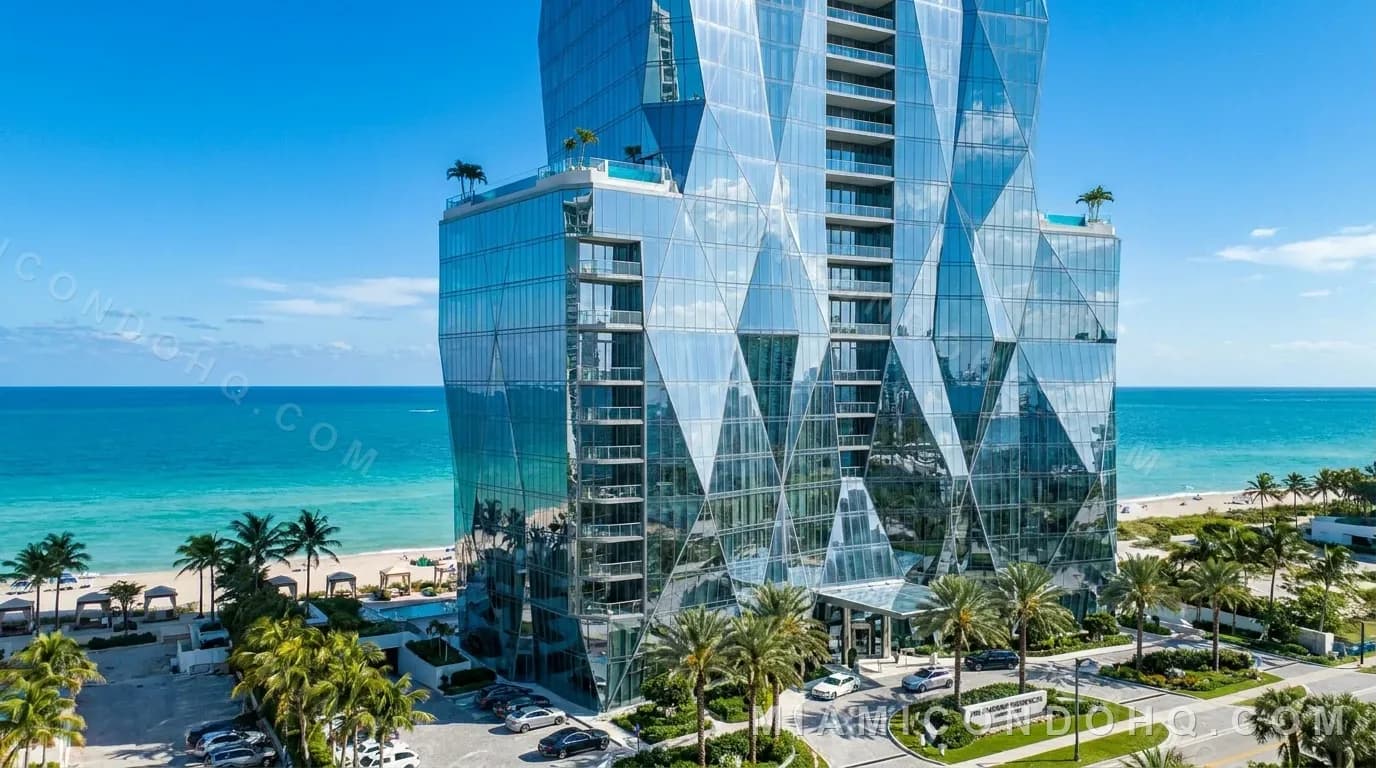
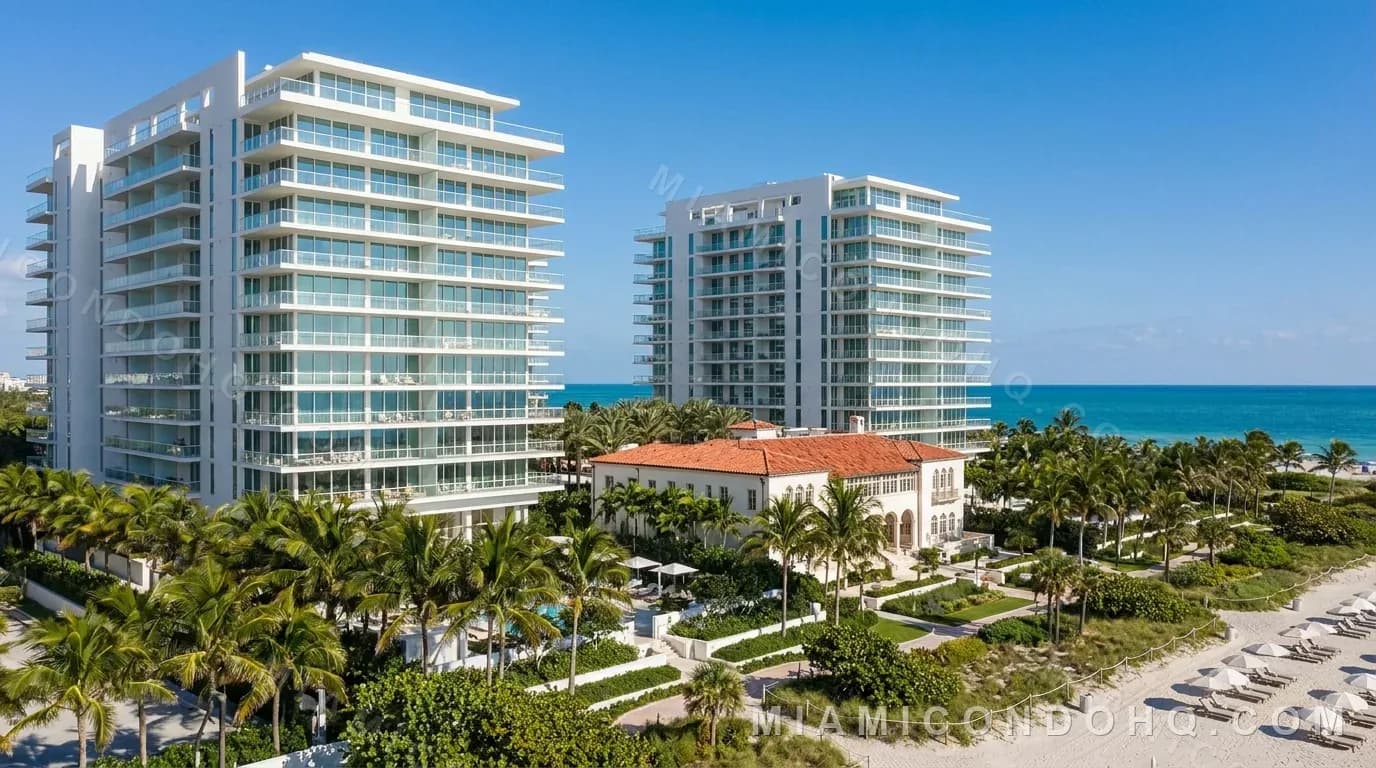
At the top of the market Miami has buildings where the car parks inside your residence, and the charging question changes shape. Our directory records Porsche Design Tower at /buildings/porsche-design-tower as a 2017 building of 60 stories and 132 units in /neighborhoods/sunny-isles-beach, whose patented Dezervator elevators carry residents and their cars up to private sky garages adjacent to the living room. Bentley Residences at /buildings/bentley-residences-miami is under construction on the same stretch of Collins Avenue, planned at 63 stories and 216 units for completion in 2028, with a private multi-car garage on each residence's own floor.
For a residence marketed with vehicle access or charging, verify the parking interest and electrical installation in the unit documents. Ask about equipment capacity, approval requirements, maintenance and outage arrangements before adding those features to a purchase comparison.
Questions Miami condo buyers ask about EV charging
Can a Miami condo association stop me from installing an EV charger?
Not where section 718.113(8) applies. An association may not prohibit an owner from installing a charging station within the owner's limited common element or exclusively designated parking space, though it may set reasonable architectural standards and require licensed installation.
Who pays for the charger and the electricity?
The owner does. The statute places the cost of the equipment, installation, operation, maintenance, repair and electricity on the owner, along with responsibility for damage caused by the installation or its use, and for removal if the station comes out later.
Does the right apply if my parking is valet or assigned by the board?
Generally no. The protection attaches to a space that is a limited common element of your unit or is exclusively designated to it. With valet-only or revocably assigned parking you are asking the board's permission rather than exercising a statutory right, so read the declaration's parking provisions first.
Can the association require insurance for my charging station?
Yes. Associations commonly require a certificate of insurance covering the installation and naming the association as an additional insured, so plan for that alongside the electrical work rather than after it.
Can the board install chargers for everyone instead?
Yes. An association may place charging stations on the common elements for residents and guests and set the charges for their use. That is a budget decision, so look at how it is funded before assuming it lowers your own cost.
What to ask before you close
Four questions get you to a real answer. Ask the manager how your specific space is held in the declaration. Ask whether the building has an approved specification for charger installations and who has used it. Ask what spare electrical capacity the garage has, because in an older tower that is the binding constraint rather than the rules. And ask whether the association has installed or budgeted common-element stations, since that changes both your options and your dues.
Approval for the work runs through the same association machinery as everything else, and how that machinery behaves is set out at /blog/miami-condo-board-approval-process.
For a specific parking space, obtain the documents establishing its ownership or assigned-use status and the association’s current installation requirements. Take those records to the qualified professionals advising you before committing to equipment or work.
Miami availability
Miami Condo HQ has no live Miami MLS feed. Sample listings do not establish availability or transaction prices. Use /contact to request an introduction to a licensed partner agent for the residence you are researching.

Written by
Miami Condo HQ
Real-estate research publisher
Miami Condo HQ is published by Eltherion, LLC to help readers research Miami buildings, neighborhoods and real-estate decisions. We publish source notes, ownership guides and practical tools, and help readers request introductions to licensed partner agents. We are not a licensed brokerage.