What the High-Velocity Hurricane Zone actually requires
Miami-Dade sits inside Florida's High-Velocity Hurricane Zone, which carries the state's most demanding wind-borne debris requirements. Condos there protect exterior openings with impact-rated glazing or an approved shutter system, certified by a Miami-Dade Notice of Acceptance. Towers completed after the 2002 Florida Building Code were designed to those rules from the start; older buildings were often retrofitted instead.
Florida writes one building code for the whole state and then carves out a stricter zone for its most exposed corner. Miami-Dade and Broward counties make up the HVHZ, a designation whose modern form traces to Hurricane Andrew in August 1992 and the rebuilding of South Florida's code and enforcement that followed. Inside that zone, the building envelope is engineered on the assumption that debris will strike it.
The reasoning is about pressure rather than glass. When a window fails during a hurricane, wind enters the building and pushes outward against roof and walls from the inside while still pulling on them from the outside. Openings are where structural failures tend to begin, which is why the code treats a window as a structural element rather than a finish.
Impact glass, shutters, and the Notice of Acceptance
Two approaches satisfy the requirement. Impact-resistant glazing is laminated: panes bonded to a plastic interlayer that holds the glass together when struck, so the pane may crack while the opening stays sealed. The alternative is an approved shutter system deployed over ordinary glazing ahead of a storm. Both are compliant paths, and a building may use one, the other, or a mix across its elevations.
Products are certified rather than assumed. Miami-Dade's product control process issues a Notice of Acceptance, an NOA, to assemblies that pass the county's test protocols — among them a large-missile test that fires a nine-pound two-by-four at the assembly, followed by a cycling test that loads it through thousands of pressure reversals. An NOA carries a number and an expiration date. That matters to a buyer: "impact windows" in a listing description is a claim, while an NOA is evidence, and the two are not the same thing.
Why the year a tower was built matters
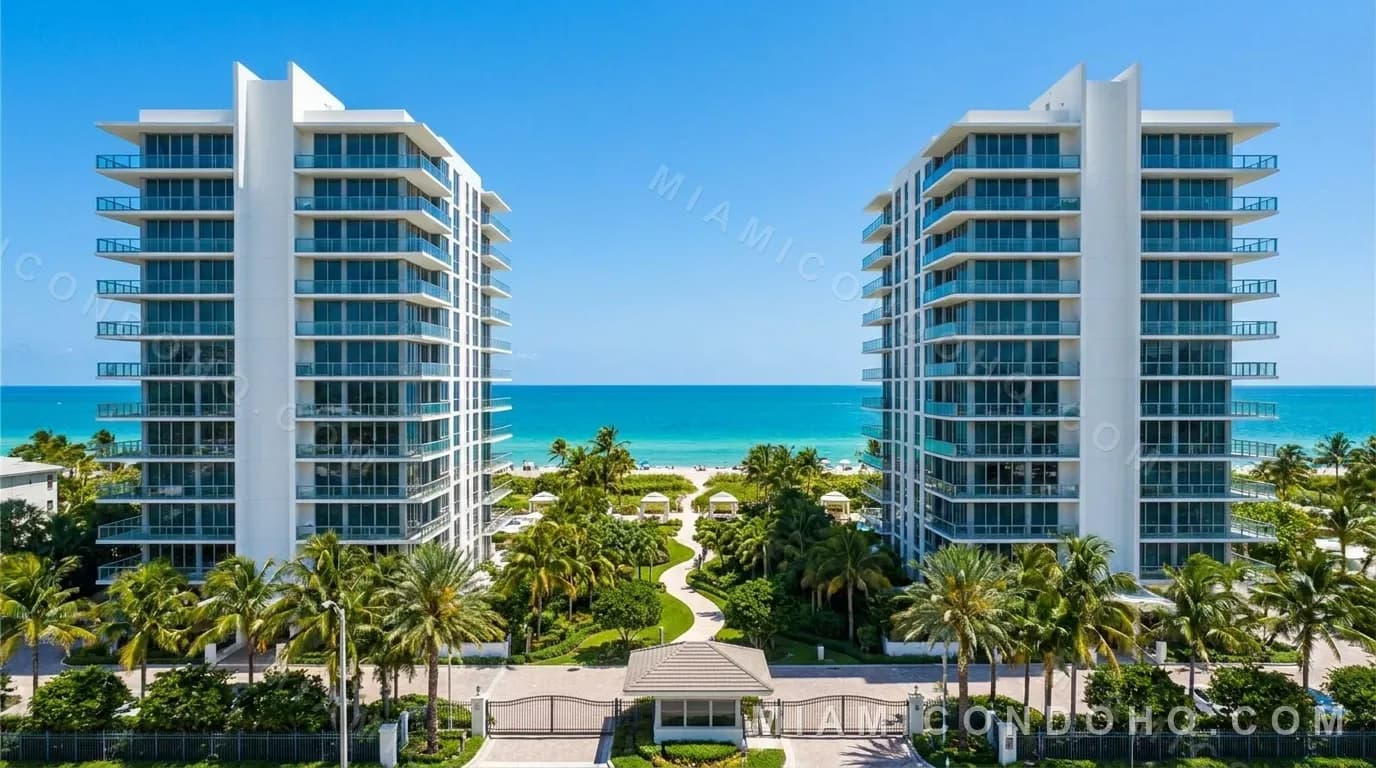
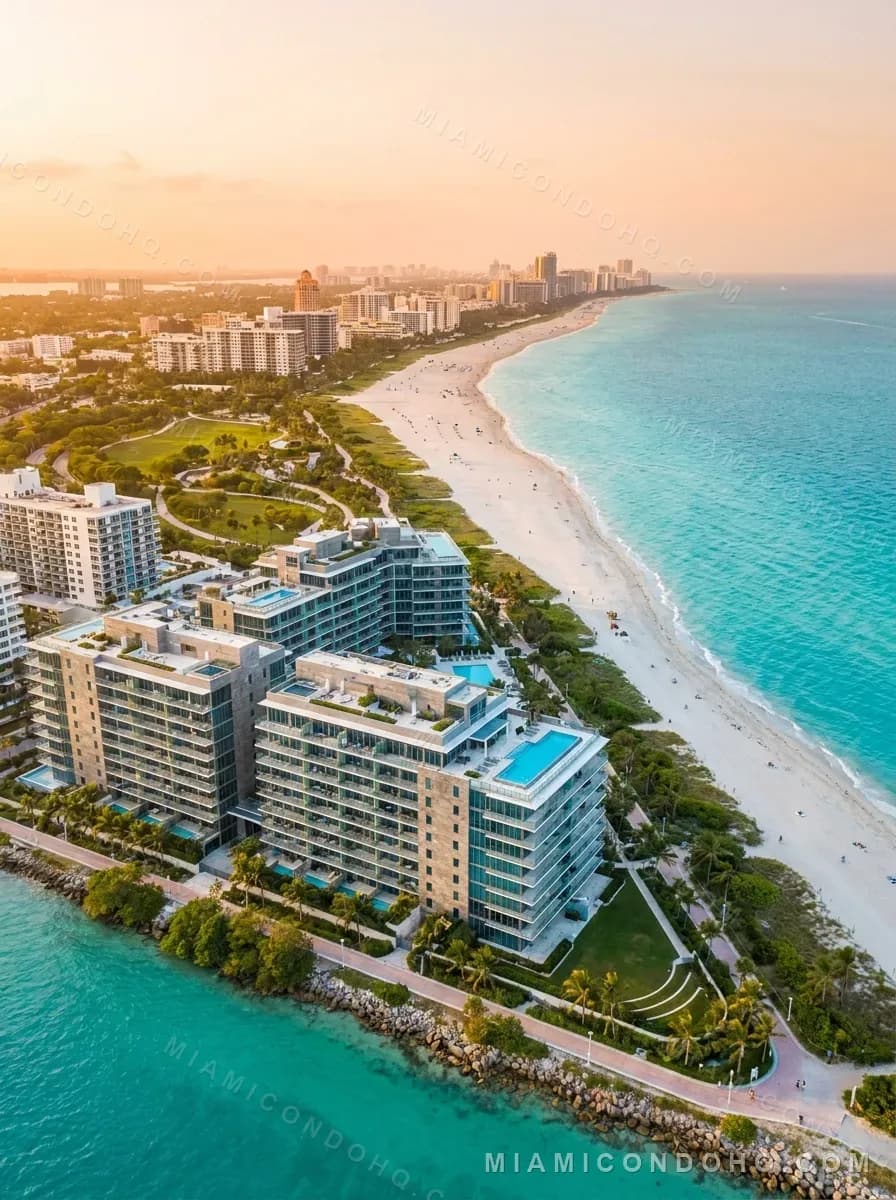
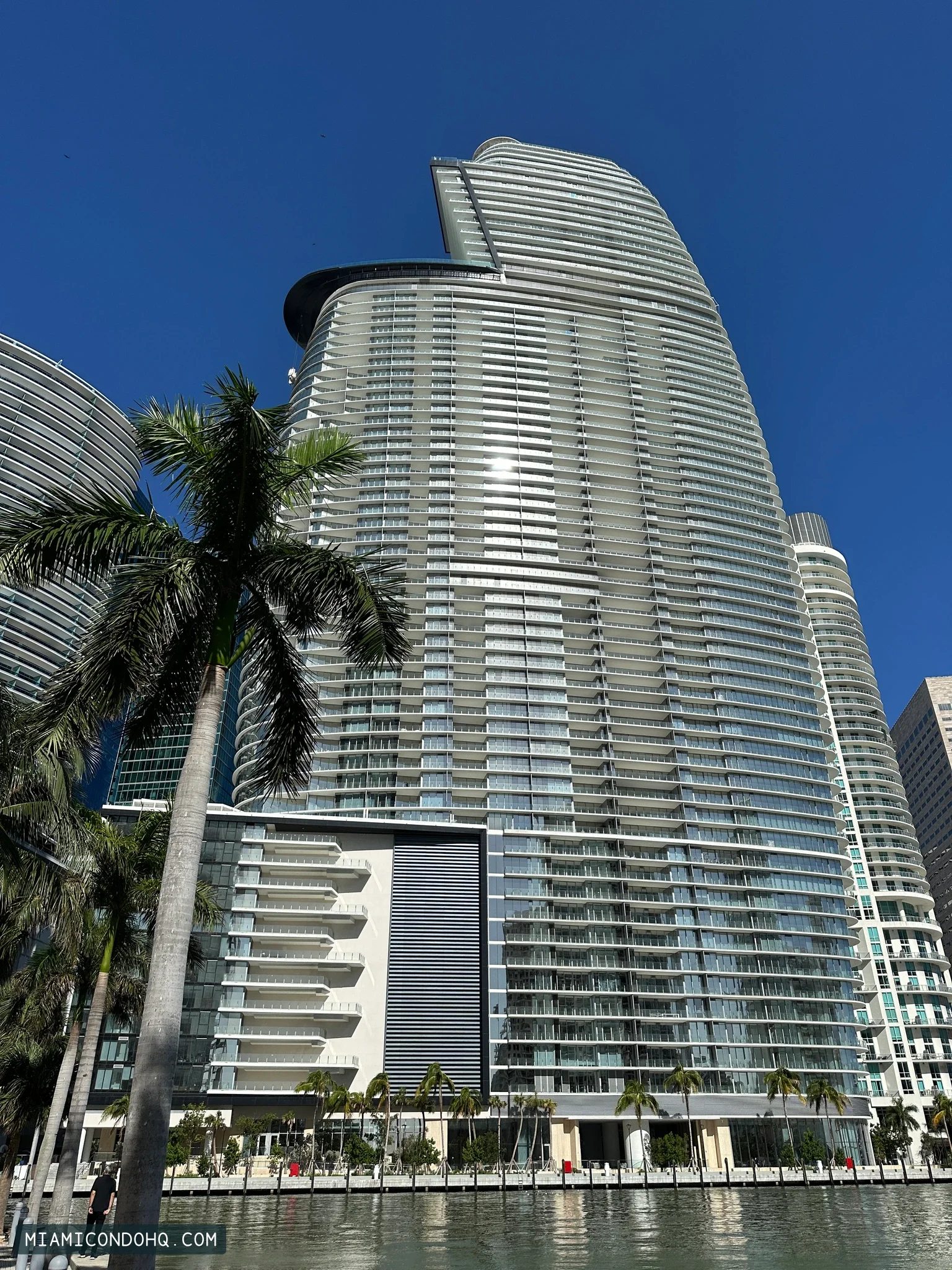
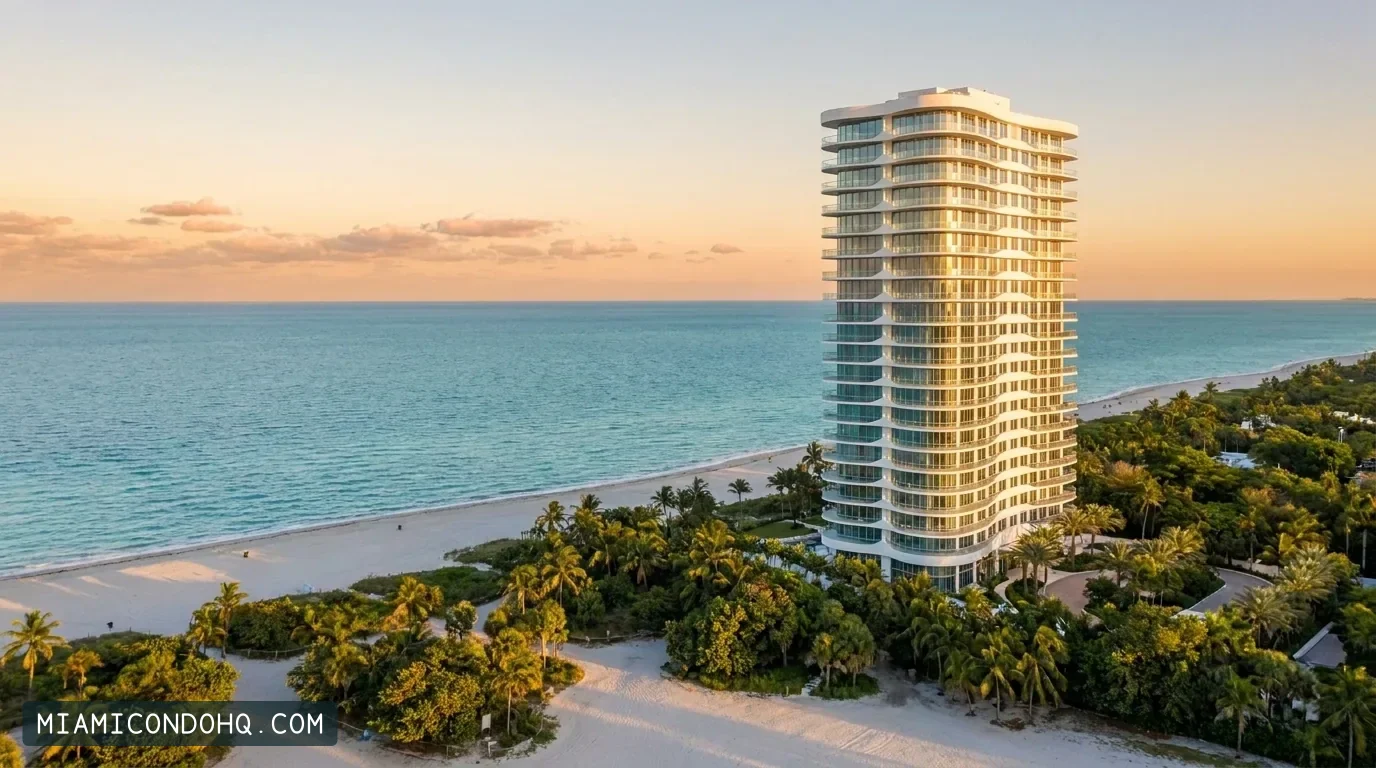
The statewide Florida Building Code took effect in 2002, consolidating a patchwork of local codes and carrying the HVHZ provisions forward for Miami-Dade. Completion year is the quickest proxy a buyer has for the standard a tower was designed under, and our directory records it on each building profile: Murano Grande at 2003, Acqualina Resort & Residences at 2006, Continuum South Beach and Apogee South Beach both at 2008, Aston Martin Residences at 2024.
Those are our directory's research figures, and the proxy is imperfect in a way worth understanding. The permit date rather than the completion date determines which edition of the code a design was reviewed against, so a tower finished in 2003 may have been permitted years earlier under different rules. Treat the year as a starting question, not an answer. The full directory is at /buildings, and each profile carries its own record.
Who pays for the windows, you or the association
This is where Miami condo buyers are most often caught out. In a condominium the exterior wall and frequently the windows themselves are a common element or limited common element rather than the unit owner's private property, and the declaration of condominium is what decides. Florida law also allows a board to install hurricane protection for the building as a common expense, which means a window replacement program can reach you as an assessment rather than as a choice you make for your own residence.
The practical consequence is that a building still carrying original glazing has a future capital cost attached to it whether or not anyone has named it yet. Since Florida's post-Surfside reforms tightened structural reserve requirements, deferred envelope work is exactly the kind of item a structural integrity reserve study exists to surface. Our guide to that process is at /blog/miami-condo-milestone-inspection-sirs.
What hurricane protection does to your insurance
Florida requires property insurers to offer premium discounts for verified wind-mitigation features, and opening protection is among the features credited. Verification comes from a wind mitigation inspection, which documents opening protection alongside roof shape, roof deck attachment and roof-to-wall connections.
In a condominium the benefit is split across two policies. The association's master policy insures the building, so envelope upgrades show up in the master premium and therefore in your monthly dues. Your own HO-6 covers the interior, contents, liability and loss assessment. Both respond when the building's wind rating changes, which is why an envelope project can raise dues in the short run and reduce insurance pressure in the longer one. How the two policies divide responsibility is covered at /blog/miami-condo-insurance-master-policy-vs-ho6.
What to ask before you buy
Five questions, none of which require a specialist. Ask whether the windows and sliding glass doors are impact-rated or protected by shutters, and ask for the NOA numbers rather than accepting a yes. Ask when the envelope was last replaced or upgraded. Ask whether the declaration treats windows as a common element, a limited common element or unit-owner property. Ask what the reserve study says about glazing and the envelope. Ask whether the building's wind mitigation credits are current.
The answers vary widely by building rather than by neighborhood, which is why the building profile is the right unit of research. Oceanfront and bayfront towers in /neighborhoods/south-of-fifth and the high-rise stock in /neighborhoods/brickell face the same code, and differ mainly in when they were built and how their boards have funded the work since.
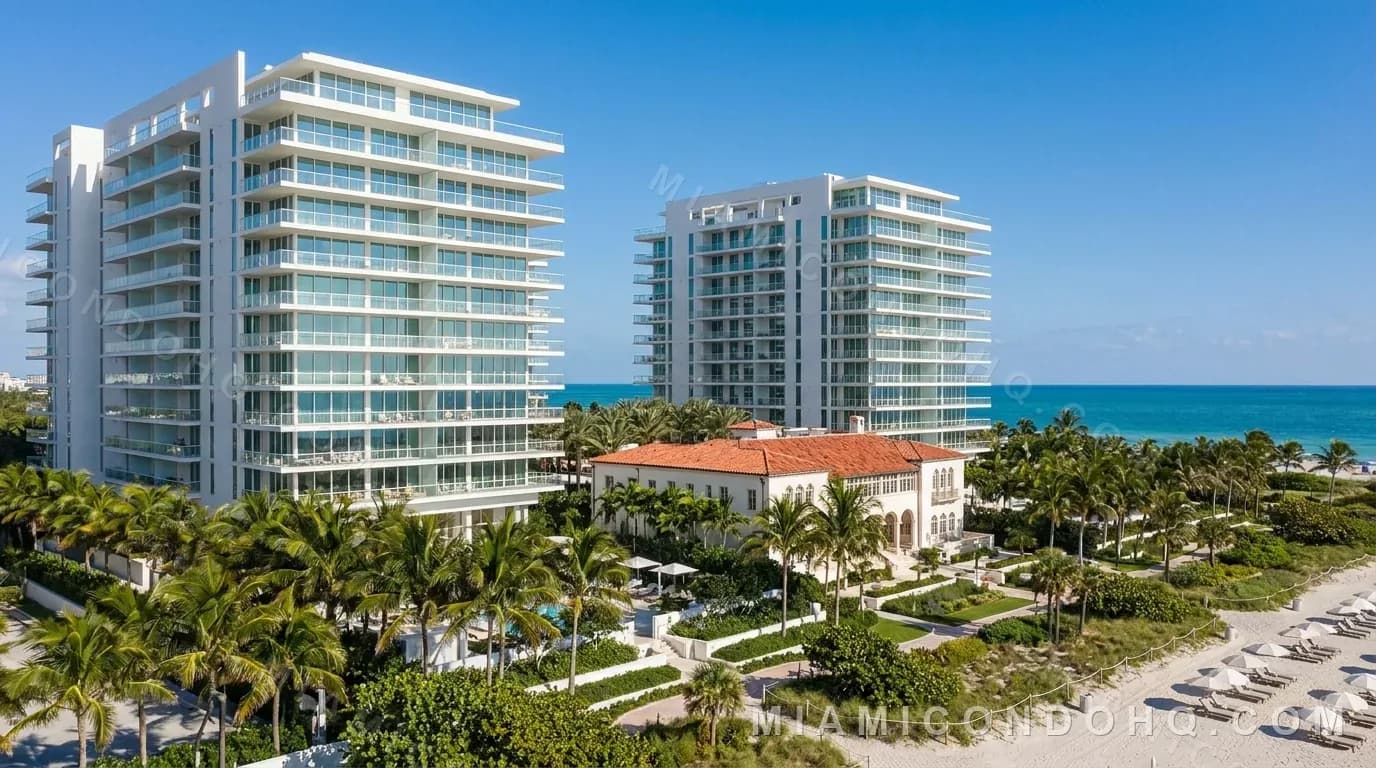
We are a research directory rather than a brokerage: we do not list on the MLS, negotiate offers or close transactions. When you have a specific building and want the declaration and reserve study read properly, we introduce you to a licensed partner agent. For a specific residence, obtain the applicable product, permit and association records; a building photograph cannot establish window performance or approval.
Questions Miami condo buyers ask about hurricane protection
Are impact windows required in Miami condos?
Miami-Dade sits inside the High-Velocity Hurricane Zone, where the Florida Building Code requires exterior openings to be protected against wind-borne debris. That protection can be impact-rated glazing or an approved shutter system, so impact glass specifically is not the only compliant answer. Buildings predating the modern code were built to earlier standards and may have been retrofitted since.
What is a Miami-Dade Notice of Acceptance?
An NOA is the county product-control approval issued to a window, door or shutter assembly that has passed the required test protocols, including a large-missile impact test and a pressure-cycling test. It carries a number and an expiration date. Asking for NOA numbers is how a buyer verifies an impact-glazing claim rather than taking it on faith.
Does the association or the owner replace condo windows in Florida?
The declaration of condominium decides, and in many Florida condominiums the windows are a common or limited common element rather than private property. Florida law also permits a board to install hurricane protection as a common expense, so a replacement program can arrive as an assessment. Read the declaration's maintenance allocation before assuming the cost is yours alone or the building's alone.
Do impact windows lower condo insurance in Florida?
Florida requires insurers to offer premium discounts for verified wind-mitigation features, and opening protection is one of them, documented through a wind mitigation inspection. In a condominium the effect is split: envelope upgrades move the association's master policy premium and therefore dues, while your own HO-6 covers interior, contents, liability and loss assessment.
How can I tell which code edition a Miami tower was designed under?
Completion year is the usual proxy, and our directory lists it on each building profile — Murano Grande at 2003, Acqualina at 2006, Continuum South Beach and Apogee South Beach at 2008, Aston Martin Residences at 2024. It is imperfect, because the permit date rather than the completion date determines the applicable edition, so confirm with the association or the building department before relying on it.
Miami availability
Miami Condo HQ has no live Miami MLS feed. Sample listings do not establish availability or transaction prices. Use /contact to request an introduction to a licensed partner agent for the residence you are researching.

Written by
Miami Condo HQ
Real-estate research publisher
Miami Condo HQ is published by Eltherion, LLC to help readers research Miami buildings, neighborhoods and real-estate decisions. We publish source notes, ownership guides and practical tools, and help readers request introductions to licensed partner agents. We are not a licensed brokerage.