In a Miami branded residence, the condominium assessment governed by Florida Statutes Chapter 718 may be only one of the charges an owner pays. Some projects add a master association, a club or shared facilities. Whether a master association falls under Chapter 718 or Chapter 720 depends on who its members are.
This guide explains that structure from the statute text, read on the Florida Legislature's site on October 23, 2026, and from the official association and developer pages cited with this post. It does not publish fee amounts. Miami Condo HQ has no live Miami MLS feed and does not quote Miami dues or prices; the branded towers we track are grouped at /branded-residences.
Two chapters, two kinds of association
Section 718.103(3) defines a condominium association broadly. It is the entity that operates the common elements, and also any entity that operates or maintains other real property in which unit owners have use rights, where membership is composed exclusively of unit owners or their elected or appointed representatives and is a required condition of unit ownership.
Chapter 720 covers homeowners' associations. Section 720.301(9) defines one as a Florida corporation operating a community, in which membership is a mandatory condition of parcel ownership and which can impose assessments that may become a lien. The same section counts a unit among the things that can be a parcel, and says a member may include an association representing parcel owners. Section 720.302(4) then says Chapter 720 does not apply to any association subject to regulation under Chapter 718.
Read together, the definitions give a working test rather than a verdict. A master association whose members are exclusively condominium unit owners, or their representatives, fits Chapter 718's wider definition. One whose membership reaches beyond unit owners may instead be a Chapter 720 homeowners' association. The answer decides which budget, records and disclosure rules apply, so take it from the recorded documents and a Florida attorney, not from a brochure.
Where branded projects add charges beyond the condominium
A branded tower can share its site with property that is not part of the condominium. Section 718.103(26) calls a condominium containing both commercial and residential units a mixed-use condominium, and section 720.302(3)(b) says Chapter 720 does not apply to the commercial or industrial parcels in a community that mixes them with residential parcels.
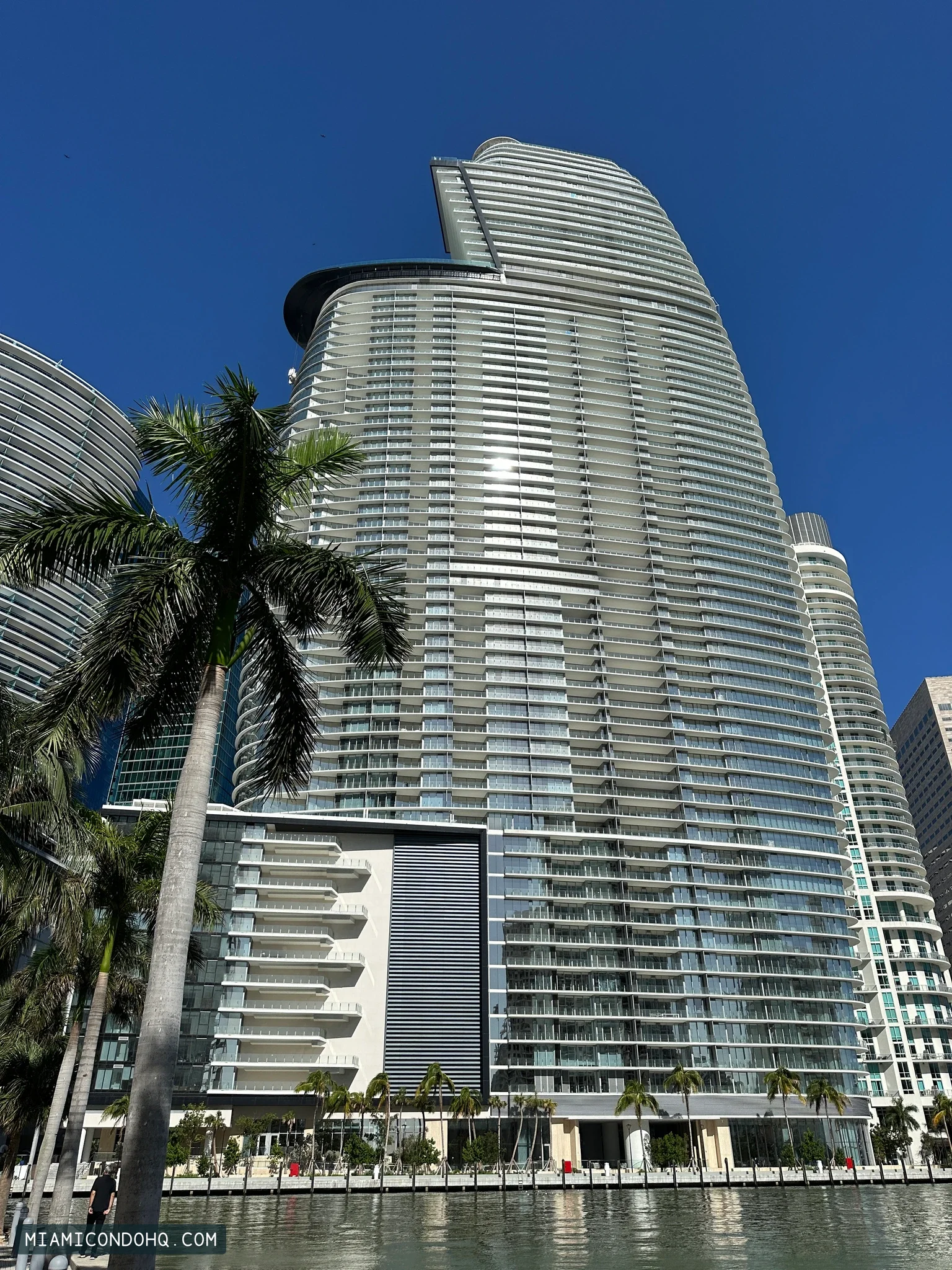
Two official legal pages show what this looks like. The Aston Martin Residences legal page says the condominium, while primarily residential, contains limited commercial units, and that the adjacent marina is not part of the condominium: a private party is intended to own or operate it, and any use rights are at that party's sole discretion. The Cipriani Residences Miami legal page says restaurants and other businesses are expected to operate from commercial components offered for sale to third parties, and that access may be restricted or may require access fees or club fees.
Neither page is a fee schedule, and neither says the project has a master association. They show that the residential assessment may not cover everything an owner uses next door. The profiles are at /buildings/aston-martin-residences and /buildings/cipriani-residences-miami.
What master associations look like in Miami
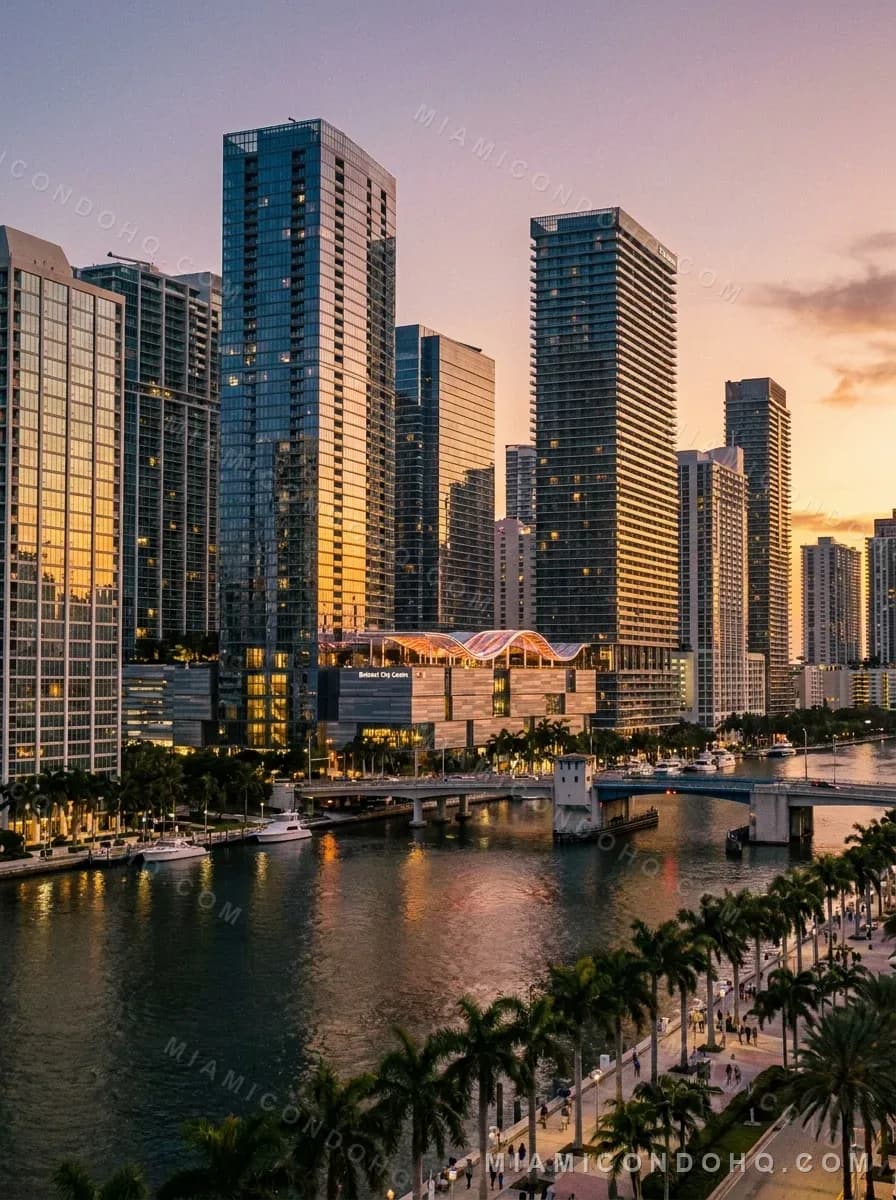
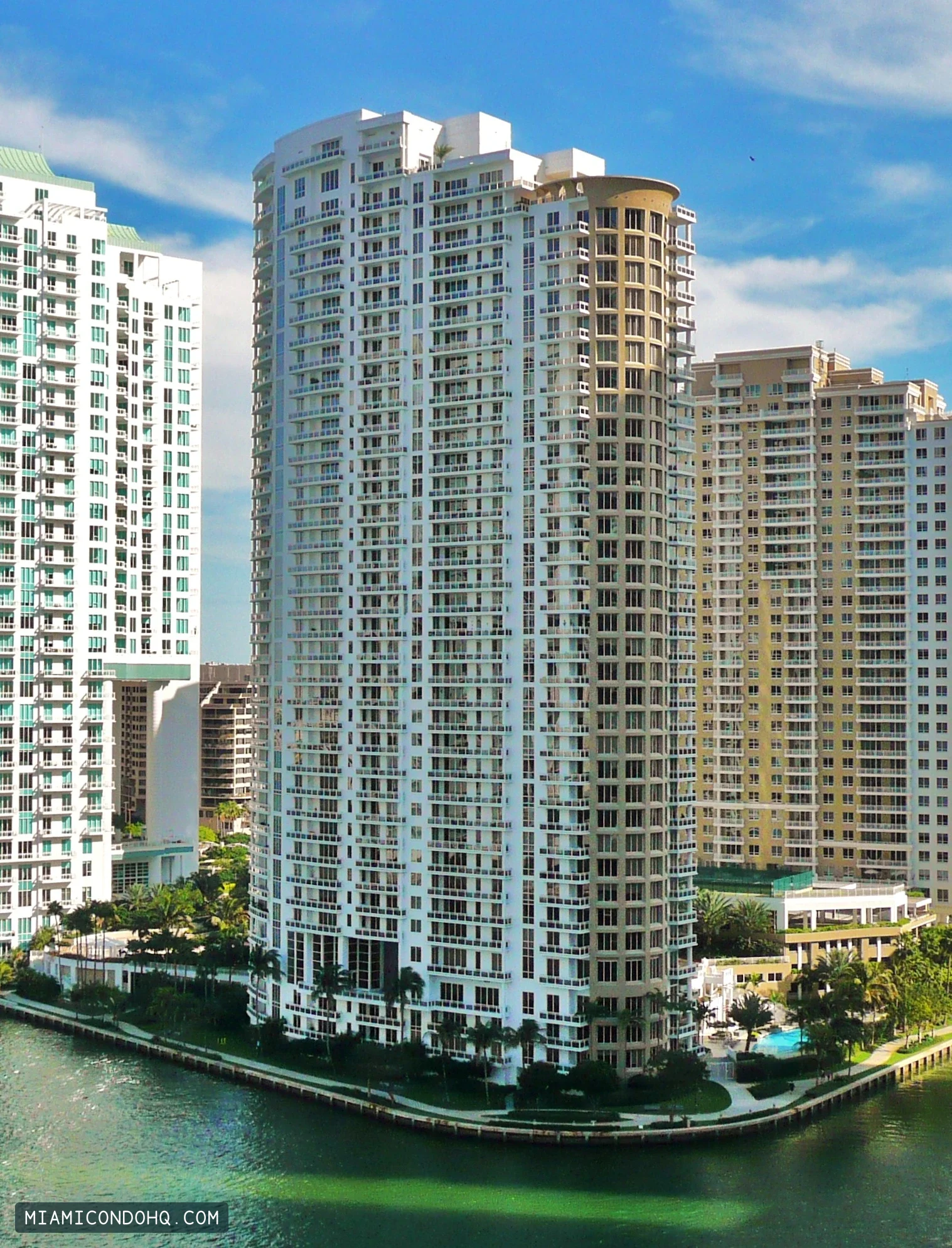
The clearest local examples are not branded. The Brickell Key Master Association's website describes the island as a mixed-use community with 11 condominium buildings and nearly 3,000 condominium units, alongside the Courvoisier Centre offices, shops, a marketplace and the Mandarin Oriental hotel, and says each condominium has its own private amenities. Buildings it lists include Carbonell, at /buildings/carbonell-condominium, and Brickell Key Two, at /buildings/brickell-key-ii.
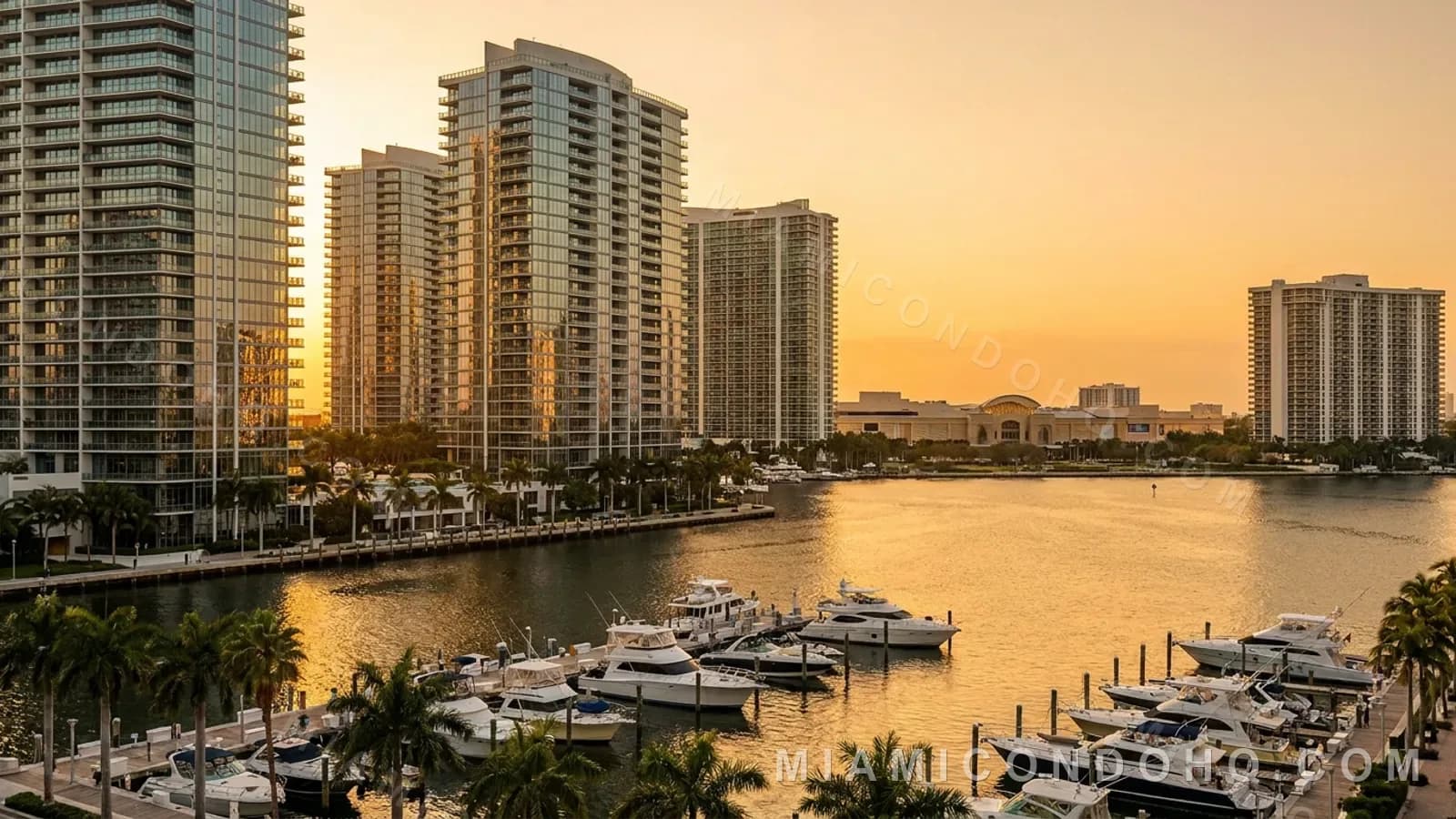
On the bay side of South Beach, the Mirador Master Association says it is made up of one representative from each sub-association and is not involved in running the individual associations. It owns the gym at 1000 West Avenue, which a private entity operates, and the parking facility at 1125 West Avenue, which it operates itself. An owner at /buildings/mirador-1125 therefore deals with a tower budget and a separate body that owns the garage at the same address. Our guide at /blog/portofino-tower-miami-beach-condo-association-guide covers a third example, the Portofino South Pointe Master Association.
Where each layer appears in a developer's offering
For new construction, section 718.504 sets what the prospectus must say. Its Frequently Asked Questions and Answers page must state whether owners or the association must pay rent or land use fees for recreational or other commonly used facilities, whether the condominium is created within a portion of a building or a multiple parcel building, and whether membership in a recreational facilities association is mandatory, with the fees charged per unit type.
Section 718.504(7) requires a description of facilities shared with other condominiums, community associations or planned developments whose costs owners pay directly or indirectly, including who will own each one. Section 718.504(8) requires conspicuous statements when there is a recreation lease or club membership, and when anyone other than the association holds a lien right for those payments. Section 718.504(21) requires the estimated budget to show what the association collects and, separately, what each owner pays to persons or entities other than the association.
Then read section 718.503(1)(c) closely. Changes in the budgets of any master association, recreation association or club are not considered amendments that modify the offering, so the figure for those entities is an estimate, not a commitment.
If the master body is a Chapter 720 association, section 720.303(6)(a) requires its budget to set out separately all fees it pays for recreational amenities, whoever owns them, and section 720.308(1) requires the governing documents of a community created after October 1, 1995 to specify each member's proportional share of expenses. Chapter 720's disclosure summary in section 720.401 does not apply when disclosure is made under Chapter 718, so expect that information in the Chapter 718 disclosures instead.
The estoppel certificate names every association
At resale, the most reliable list is the estoppel certificate. Section 718.116(8) requires a condominium association to issue one within 10 business days of a written or electronic request from the owner, a mortgagee or their designee, and the statutory form asks for a list of, and contact information for, all other associations of which the unit is a member. Section 720.30851 sets the same deadline and asks the same question of a homeowners' association. Request a certificate from each association listed, and ask whether its charges are billed through the condominium or separately.
Questions buyers ask about master association fees in Miami branded residences
Is a master association fee included in a Miami condo's HOA fee?
Not necessarily. Section 718.504(21) requires a developer's estimated budget to show, separately from association assessments, the expenses a unit owner pays to persons or entities other than the association. On a resale, ask each association named on the estoppel certificate how its charges are billed.
Is a Miami master association governed by Chapter 718 or Chapter 720?
It depends on its membership and documents. Section 718.103(3) treats an entity maintaining property that unit owners use as a condominium association when its members are exclusively unit owners or their representatives, and section 720.302(4) excludes associations regulated under Chapter 718 from Chapter 720. A Florida attorney reading the recorded declaration can confirm which applies.
Can a master association's budget change after I sign a pre-construction contract?
Yes. Section 718.503(1)(c) says changes in the budgets of any master association, recreation association or club are not considered amendments that modify the offering, so treat any figure for those entities as an estimate.
Is the marina or restaurant at a branded tower part of the condominium?
Not always. The Aston Martin Residences legal page says its adjacent marina is not part of the condominium, and the Cipriani Residences Miami legal page says its commercial components will be offered for sale to third parties, with access that may require fees. Check the declaration and any shared-facilities agreement.
Does Miami Condo HQ publish master association fees for branded residences?
No. We have no live Miami MLS feed and publish no Miami dues, prices or availability. Fee amounts belong in each association's adopted budget, the offering circular for new construction and the estoppel certificates at resale.
Checking a specific building
Start with the legal names: /condo-associations lets you look up Miami-Dade condominium associations, and /blog/reading-a-miami-condo-budget-where-dues-go walks through one association's budget. If a shared facility needs major work, /blog/florida-condo-special-assessments-miami covers how assessments are approved, and /blog/branded-residence-vs-hotel-condo-miami explains how branded ownership differs from a hotel-condo.
Miami Condo HQ is published by Eltherion, LLC, a research publisher, not a brokerage. Have a Florida real estate attorney review the declaration, any master or shared-facilities documents and the estoppel certificates before relying on a monthly figure.
Sources and review scope
Sources checked 2026-10-23. The notes identify which facts each publication supports.
- The Florida Legislature — 2026 Florida Statutes, Section 718.103 (Definitions), read October 23, 2026
718.103(2): an assessment is a share of the funds required for the payment of common expenses; 718.103(3): association includes any entity which operates or maintains other real property in which unit owners have use rights, where membership is composed exclusively of unit owners or their elected or appointed representatives and is a required condition of unit ownership; 718.103(26): a condominium containing both commercial and residential units is a mixed-use condominium.
- The Florida Legislature — 2026 Florida Statutes, Section 718.116 (Assessments; liability; lien and priority; interest; collection), read October 23, 2026
718.116(8): the association must issue an estoppel certificate within 10 business days after a written or electronic request from a unit owner, mortgagee or designee; the statutory form asks for a list of, and contact information for, all other associations of which the unit is a member.
- The Florida Legislature — 2026 Florida Statutes, Section 718.503 (Developer disclosure prior to sale; nondeveloper unit owner disclosure prior to sale), read October 23, 2026
718.503(1)(c): changes in budgets of any master association, recreation association, or club and similar budgets for entities other than the association shall not be considered amendments that modify the offering.
- The Florida Legislature — 2026 Florida Statutes, Section 718.504 (Prospectus or offering circular), read October 23, 2026
Frequently Asked Questions and Answers page must indicate rent or land use fees for recreational or other commonly used facilities, whether the condominium is created within a portion of a building or within a multiple parcel building, and whether membership in a recreational facilities association is mandatory with fees per unit type; 718.504(7): description of facilities used in common with other condominiums, community associations or planned developments, including who will own each facility; 718.504(8): conspicuous statements for recreation leases, club memberships and lien rights held by persons other than the association; 718.504(21): estimated budget showing association expenses collected by assessments and each unit owner's expenses payable to persons or entities other than the association.
- The Florida Legislature — 2026 Florida Statutes, Section 720.301 (Definitions), read October 23, 2026
720.301(9): a homeowners' association is a Florida corporation responsible for the operation of a community in which membership is a mandatory condition of parcel ownership and which is authorized to impose assessments that, if unpaid, may become a lien; 720.301(10): a member may include an association representing parcel owners; 720.301(11): a parcel may be a lot, tract, unit or other subdivision of real property.
- The Florida Legislature — 2026 Florida Statutes, Section 720.302 (Purposes, scope, and application), read October 23, 2026
720.302(3)(b): Chapter 720 does not apply to the commercial or industrial parcels in a community that contains both residential and commercial or industrial parcels; 720.302(4): Chapter 720 does not apply to any association that is subject to regulation under chapter 718, 719 or 721.
- The Florida Legislature — 2026 Florida Statutes, Section 720.303 (Association powers and duties; meetings of board; official records; budgets; financial reporting), read October 23, 2026
720.303(6)(a): the homeowners' association budget must set out separately all fees or charges paid for by the association for recreational amenities, whether owned by the association, the developer, or another person.
- The Florida Legislature — 2026 Florida Statutes, Section 720.308 (Assessments and charges), read October 23, 2026
720.308(1): for any community created after October 1, 1995, the governing documents must describe the manner in which expenses are shared and specify the member's proportional share.
- The Florida Legislature — 2026 Florida Statutes, Section 720.30851 (Estoppel certificates), read October 23, 2026
Homeowners' association must issue an estoppel certificate within 10 business days after a written or electronic request; the form asks for a list of, and contact information for, all other associations of which the parcel is a member.
- The Florida Legislature — 2026 Florida Statutes, Section 720.401 (Prospective purchasers subject to association membership requirement; disclosure required), read October 23, 2026
720.401(2): the disclosure summary requirement does not apply to any association regulated under chapter 718 and does not apply if disclosure regarding the association is otherwise made in connection with the requirements of chapter 718.
- Aston Martin Residences — Legals, read October 23, 2026
While primarily a residential tower, the Condominium contains limited commercial units; the marina adjacent to the Miami River is not included as part of the Condominium and is intended to be owned and/or operated by a private party, with any rights of use in that party's sole discretion.
- Cipriani Residences Miami — Legal, read October 23, 2026
Restaurants and other business establishments are anticipated to be operated from the commercial components of the project, which will be offered for sale to third parties; access to such establishments may be restricted and/or may require the payment of access fees or club fees.
- Brickell Key Master Association — Buildings, read October 23, 2026
Describes Brickell Key as a mixed-use public/private island community with 11 condominium buildings and nearly 3,000 condominium units, the Courvoisier Centre office complex, shops, a marketplace and the Mandarin Oriental Hotel; each condominium has its own private amenities; lists Carbonell and Brickell Key Two among the buildings.
- Mirador Master Association — official site, read October 23, 2026
Comprised of one representative from each sub-association; not directly involved in the operations or management of individual sub-associations; the gym at 1000 West Avenue and the parking facility at 1125 West Avenue are the property of the Mirador Master Association; the gym is operated by a private entity and the parking facility by the master association.
Written by
Publisher and editor, Miami Condo HQ
Miami Condo HQ is published by Eltherion, LLC. This article is not reviewed by a licensed real estate agent or broker and is not professional advice.